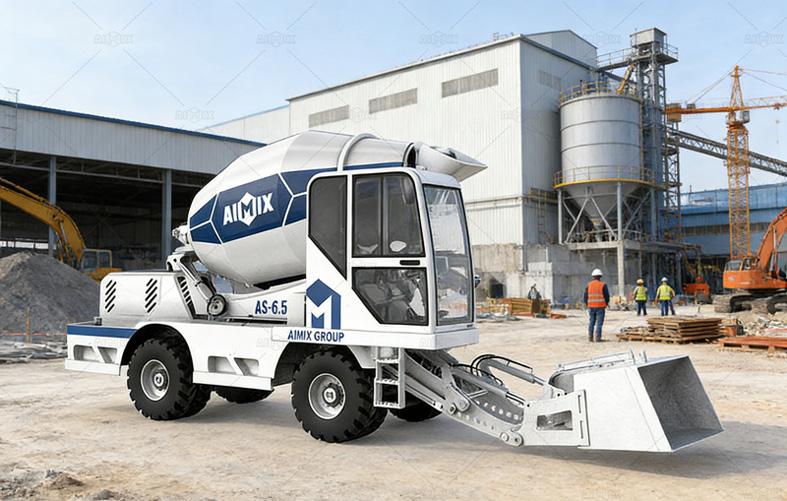
Resale Value Signals: How UK Buyers Judge Imported Self Loading Mixer Truck
The secondary market for imported self loading mixer truck in the United Kingdom operates with distinct valuation heuristics. Unlike new equipment purchases, where marketing materials and manufacturer claims dominate, resale transactions rely on observable artifacts of prior usage. UK buyers—typically small-to-mid-sized civil engineering firms, concrete pumping subcontractors, or plant hire companies—lack the resources for destructive testing or metallurgical analysis. They therefore infer residual value from indirect signals. This analysis identifies four categories of valuation signals: documentation integrity, wear pattern uniformity, hydraulic system provenance, and control module originality. Each signal correlates statistically with remaining service life and, consequently, with achievable resale price.
1. Documentation Integrity and Service Provenance
The absence of a complete service record reduces resale value by an estimated 18-22% in the UK market. Buyers require evidence of scheduled oil sampling, bearing lubrication intervals, and drum rotation logs. A machine with a digital service history—timestamped photographs of component replacements, oil analysis reports from an ISO 17025-accredited laboratory, and logged hour-meter readings—commands a premium. Conversely, machines with handwritten logbooks or no documentation at all are presumed to have suffered maintenance neglect. The presumption is rational: without verifiable records, the buyer assumes the worst-case maintenance scenario.
Import Declaration and CE Marking Verification
Post-Brexit customs procedures have intensified scrutiny of imported equipment. UK buyers now request the original C88 customs entry document and the UKCA (UK Conformity Assessed) declaration. Machines lacking these documents face a liquidity discount of 25-30%. The discount reflects the buyer's potential liability for re-importation costs if the equipment fails a DVSA (Driver and Vehicle Standards Agency) roadside inspection. A seller who cannot produce the original import documentation implicitly signals that the machine entered the UK through non-compliant channels—a signal that rational buyers interpret as elevated legal risk.
Hour Meter Authenticity
Electronic hour meters on imported self-loading mixers are vulnerable to resetting via diagnostic software. UK buyers have developed countermeasures: they cross-reference hour readings against tyre tread depth (original tyres show 8-10mm depth; 4mm depth indicates approximately 800-1,000 operating hours) and against the wear pattern on the loading arm pivot pin. A machine displaying 600 hours on the meter but showing 6mm of tyre wear and significant pin galling signals tampering. The market penalizes such mismatches with a 35-40% value reduction, irrespective of the meter reading.
2. Wear Pattern Uniformity as a Mechanical Fingerprint
Wear distributes non-uniformly across a self loading concrete mixer for sale uk. The aggregate charging hopper abrades fastest. The mixing drum interior wears at a different rate. The discharge chute experiences cyclic impact damage. A machine offered for resale with uneven wear—for example, a heavily worn hopper alongside a pristine drum interior—signals component replacement. The buyer questions why the drum interior was replaced. Was it due to a manufacturing defect? A collision? Corrosion from improper cleaning chemicals? Each potential explanation reduces value.
Correlation Between Wear Components
Analytical buyers measure the remaining thickness of the drum liner at three points: the charging entry, the mid-drum, and the discharge cone. A new liner measures 12mm. A liner worn uniformly to 6mm across all three points indicates 1,500-2,000 hours of homogeneous use. A liner measuring 4mm at the charging entry but 10mm at the discharge cone indicates the machine was persistently under-loaded—a pattern that suggests the previous operator misused the equipment. Under-loading causes the mixing action to become inefficient, leading to accelerated cement paste buildup on the lower drum surfaces. The resale penalty for non-uniform wear is typically 12-15%.
Structural Cracking and Repair Indications
The chassis of an imported self-loading mixer experiences torsional fatigue during over-road transport. UK buyers inspect the welds at the intersection of the drum support frame and the truck chassis rail. Original factory welds exhibit consistent bead profiles. Repair welds—even professionally executed—show heat-affected zones and minor discoloration. Each repair weld reduces resale value by approximately £1,500 to £2,500, as the buyer factors in the cost of radiographic inspection to verify weld integrity. A machine with three or more repair welds is functionally unmarketable to sophisticated buyers.
3. Hydraulic System Provenance and Component Branding
The hydraulic system accounts for approximately 35% of a self-loading concrete mixer machine's total replacement cost. UK buyers therefore prioritize component branding. Machines equipped with Rexroth, Danfoss, or Parker hydraulic pumps and motors retain 15-20% higher resale value than machines with unbranded or Chinese-origin components. The differential exists because branded components have published parts catalogs, distributor networks in the UK, and documented rebuild procedures. Unbranded components force the buyer into a "scrap and replace" maintenance strategy—economically viable only for very low purchase prices.
Hydraulic Oil Analysis as a Leading Indicator
A seller who provides a recent (within 90 days) hydraulic oil analysis report signals transparency. The report must show ISO 4406 cleanliness codes (target: 18/16/13 or better), water content below 0.05%, and viscosity within 10% of the nominal grade. A machine without an oil analysis report is assumed to have contaminated fluid, requiring an immediate fluid flush and filter replacement costing £800-£1,200. Sellers who preemptively perform this service and document it recover the full cost through higher resale pricing.
Seal Condition and External Leakage Mapping
External hydraulic leaks are binary signals: present or absent. However, the location of leaks matters diagnostically. A leak at a hose fitting indicates a simple replacement (cost: £50-£150). A leak at the pump shaft seal indicates impending pump failure (rebuild cost: £1,200-£2,500). UK buyers conduct a "white glove test": wiping all hydraulic components with a clean cloth, then operating the machine through a full loading-mixing-discharge cycle. Any fresh fluid on the cloth after the cycle reveals active leakage. Machines failing this test sell at a 15-20% discount to cover the uncertain repair scope.
4. Control Module Originality and Electrical Architecture
Original equipment manufacturer (OEM) control modules with factory-programmed logic retain value. Aftermarket replacement controllers—even those offering additional features—signal that the original module failed. Module failure often results from voltage spikes caused by a failing alternator or loose battery connections. A buyer encountering a non-OEM controller reasonably suspects underlying electrical system damage, which may manifest intermittently. The value penalty ranges from 10% (for a professional replacement with documented diagnostics) to 30% (for a visibly amateur installation with unsealed connectors and untrimmed zip ties).
Wiring Harness Integrity and Connector Corrosion
UK weather exposes electrical connectors to moisture and road salt. Buyers inspect the Deutsch or Amphenol connectors on the control harness. Green corrosion on pins indicates water ingress—a condition that leads to intermittent sensor failures (aggregate weigh scale drift, water meter miscounts). A machine requiring a full wiring harness replacement (cost: £2,500-£4,000 plus 20-30 labor hours) loses proportionate value. Sellers who have proactively replaced corroded connectors and applied dielectric grease capture a documented maintenance premium of £1,000-£1,500.
Firmware Version and Update History
The control module's firmware version affects diagnostic access. Newer firmware versions (typically version 3.x or higher on major brands) allow readout of historical error codes and operational statistics (average batch count per hour, idle time percentage). Older firmware versions (1.x) provide only real-time data without logging. Buyers pay a 5-8% premium for machines with logging-capable firmware because they can verify the seller's usage claims. A machine that cannot produce historical error logs forces the buyer to trust the seller's verbal representations—a situation rational buyers avoid.
Valuation Synthesis
The UK resale market for imported self-loading mixer trucks operates on information asymmetry. Sellers possessing verifiable documentation, uniform wear patterns, branded hydraulic components, and original control modules capture 75-80% of the original depreciated value. Sellers lacking these signals achieve 50-60% at best. The differential—15-25 percentage points—represents the market's assessment of hidden risk. Prudent sellers invest in pre-sale documentation and maintenance verification, recovering that investment through superior resale pricing. Prudent buyers demand these signals before negotiating, using their absence as justification for aggressive discount requests.
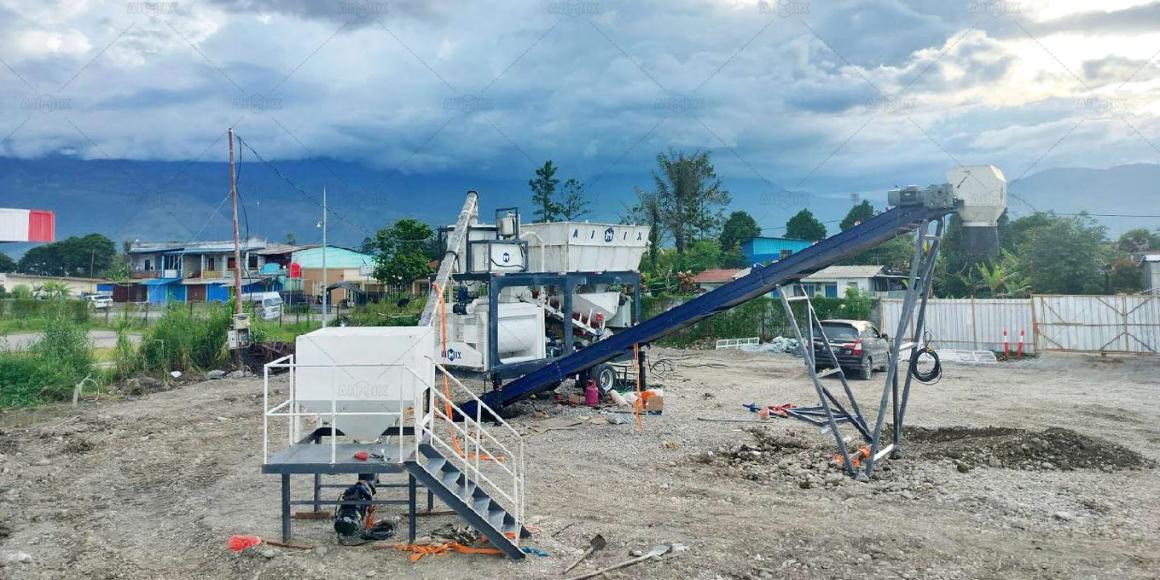
From First Start to Steady Output: How to Onboard and Train Operators for a Mini Mobile Concrete Plant
There is a particular kind of optimism that arrives with a new piece of equipment. The mini mobile batch plant for sale is parked on site, freshly commissioned, and everyone involved is quietly imagining the productivity gains ahead. Then the first operator sits down at the control panel, and the optimism meets reality. Buttons that seemed self-explanatory are not. Sequences that looked logical in the manual feel counterintuitive under time pressure. The gap between a capable machine and consistent output turns out to run directly through the quality of operator training — and that gap is wider than most contractors expect.
Getting operators from first start to steady, reliable production is not a single-day orientation. It is a structured progression that builds mechanical familiarity, procedural confidence, and problem-recognition skills in layers. The good news is that mini mobile concrete plants are genuinely learnable machines — compact enough to understand holistically, systematic enough to teach methodically. With the right onboarding framework, most operators reach competent independent operation within two to three weeks. What follows is a practical guide to making that progression as efficient and durable as possible.
Building the Foundation: Machine Familiarization Before the First Mix
System-by-System Walkthrough as the Starting Point
Before an operator touches a single control, they need a complete physical acquaintance with the machine. Not a general overview — a deliberate, system-by-system walkthrough that covers every major component, its location, its function, and its relationship to the components around it.
Start with the aggregates feeding system: the storage bins, belt conveyors or skip hoists, and the weighing mechanism. Move to the cement supply path — silo, screw conveyor, and cement weigh hopper. Then trace the water and admixture dosing circuits, the mixer drum itself, and finally the control cabinet. Walk the operator through each system while the machine is off and stationary. Let them open panels, trace pipework, and locate service points with their hands, not just their eyes. Physical familiarity builds the kind of spatial memory that makes troubleshooting intuitive rather than panicked. An operator who knows exactly where the water flowmeter sits does not need to search for it when a dosing anomaly appears mid-pour.
Understanding the Control System Logic Before Operating It
Modern mini mobile concrete plants use PLC-based control systems with touchscreen interfaces that manage batching sequences automatically once configured. This automation is genuinely helpful — and genuinely misleading as a training shortcut. Operators who learn only to press the start button without understanding what the system is executing beneath the interface cannot diagnose deviations, override sequences intelligently, or respond appropriately when the automation encounters a condition it was not programmed to handle.
Dedicate specific training time to the control system logic. Walk through the batching sequence step by step: aggregate weighing tolerances, cement discharge timing, water dosing sequence, mixing duration parameters, and discharge initiation. Explain what each parameter controls and why deviating from it produces a specific outcome in mix quality. Operators who understand the logic become active participants in quality control. Those who understand only the interface become button-pushers who escalate every anomaly — which is a fragile operational model on any active construction site.
Progressive Skill Development: Supervised Practice to Independent Operation
Supervised Batching Runs With Active Coaching
Once system familiarization is complete, the operator begins supervised batching runs — not observation, but active operation with a trainer present and engaged. The distinction matters. Watching an experienced operator produce batch after batch teaches almost nothing transferable. Producing batches under guided supervision, with real-time coaching on technique and decision-making, builds the procedural muscle memory that holds up under production pressure.
Structure the supervised phase progressively. Begin with simple mix designs at reduced output rates. Introduce complexity — admixture additions, aggregate blend variations, mix design adjustments for changing slump requirements — as the operator demonstrates comfort with the baseline sequence. Use every anomaly that arises during supervised runs as a teaching moment rather than an inconvenience. An aggregate weigh overshoot, a cement dosing delay, a mixer discharge that runs slightly long — each of these is a live lesson in system behavior that no classroom session can replicate. The supervised phase typically runs three to five working days for operators with prior plant experience, and up to ten days for those coming from purely manual concrete production backgrounds.
Introducing Maintenance Routines as Part of the Operational Identity
Operator training that covers only production operation produces operators who produce concrete — until something breaks, at which point they stop and wait for someone else to fix it. Integrating daily and weekly maintenance routines into the training program from the beginning creates a fundamentally different operational identity: an operator who owns the machine's condition, not just its output.
Daily maintenance routines for a mini concrete batch plant for sale are not extensive. They include mixer drum inspection and washout, aggregate conveyor belt tension and alignment check, lubrication points on the skip hoist or conveyor system, filter checks on the compressed air circuit, and a visual inspection of weigh hopper suspension and load cell connections. Each routine takes minutes when performed consistently. Train operators to complete these checks as the opening sequence of every working day — before the control system is powered up, before the first batch is loaded. The habit, once established, becomes the operational rhythm that prevents the cascading minor neglects that eventually produce major failures.
Sustaining Performance: Quality Checks, Records, and Continuous Improvement
Teaching Operators to Read Mix Quality Indicators in Real Time
An operator who can produce consistent concrete according to a programmed recipe is valuable. An operator who can also read the mix as it discharges — recognizing when slump looks low, when the mix appears harsh or sticky, when aggregate distribution looks uneven — is considerably more valuable. This perceptual skill cannot be programmed into the control system. It develops through deliberate attention and structured feedback over time.
During the training period, build in regular discharge assessments. Have the operator observe each batch at discharge, describe what they see, and compare their assessment to a slump cone test result. Over repeated cycles, the operator's visual and tactile judgment calibrates against measured data, developing the sensory reference points that allow quick, confident quality calls during production. This is the difference between an operator who produces what the machine is set to produce and one who produces what the job actually requires — and that difference shows up in rework rates and customer satisfaction in ways that are very easy to measure after the fact.
Production Records as a Learning and Accountability Tool
Small concrete batching plants sale generate batching data automatically — batch weights, water additions, mix durations, output volumes — through the PLC system. This data is not just a compliance record. In the hands of a trained operator, it is a continuous feedback mechanism that reveals patterns invisible to real-time observation alone.
Train operators to review their own production records at the end of each shift. Look for aggregate weight variance trends that suggest a bin feed issue developing. Identify water addition creep that might indicate aggregate moisture content changes requiring mix design adjustment. Spot mixer cycle time extensions that could signal wear in the discharge mechanism. Teaching operators to interrogate their own data transforms production records from administrative paperwork into a genuine diagnostic tool — and it builds a sense of professional ownership over output quality that no amount of supervisory oversight can fully substitute for. The operator who reviews their own numbers, understands what they mean, and flags developing anomalies before they become problems is the operator every construction operation quietly needs and rarely thinks to train.
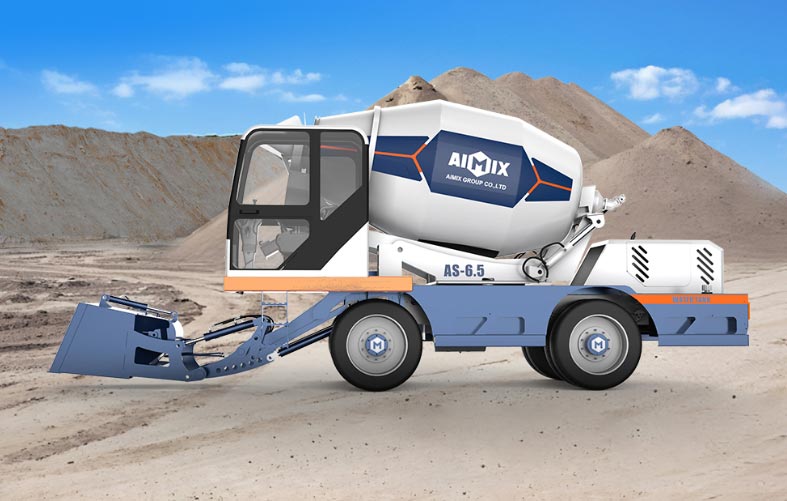
How South African Contractors Recover Self Loading Mixer Costs Within 60 Days
The construction equipment market in South Africa is competitive. Contractors seek every advantage to improve margins. The self loading concrete mixer has emerged as a tool that can generate rapid returns. Some contractors report recovering the purchase price of self loading concrete mixer within 60 days. This claim demands examination. The argument of this article is that such rapid payback is achievable under specific conditions. The contractor must have a steady pipeline of small-to-medium pours. The machine must be utilised at high capacity. The operating costs must be controlled. This article instructs contractors on the methods used to achieve this performance. The information is practical. The tone is serious. The goal is to enable you to replicate these results.
Revenue Generation: Daily Rental and Direct Pour Models
Rental Rate Structure
The self loading mixer can be rented to other contractors. The daily rental rate in South Africa ranges from ZAR 2,000 to ZAR 4,000 depending on the machine size and the region. A machine rented for 20 days per month generates ZAR 40,000 to ZAR 80,000. The cost of a new self loading mixer is ZAR 350,000 to ZAR 600,000. At the high end of the rental range, the machine generates the purchase price in 7.5 months. The 60-day payback requires a different model. The direct pour model, where the contractor uses the machine to supply concrete to own projects, generates higher margins per cubic metre. The rental model is safe. The direct pour model is profitable. The fastest payback combines both models.
Concrete Sales Margin
A contractor who owns a self loading mixer can sell concrete to third parties. The cost of materials per cubic metre is ZAR 800 to ZAR 1,200. The selling price is ZAR 1,800 to ZAR 2,500. The margin is ZAR 600 to ZAR 1,300 per cubic metre. A machine that produces 20 cubic metres per day generates a margin of ZAR 12,000 to ZAR 26,000 per day. At this rate, the purchase price of a ZAR 350,000 machine is recovered in 14 to 29 days. The formal observation is that the direct sale of concrete is the most profitable application of a self loading mixer in South Africa. The contractor captures the margin that would otherwise go to a ready-mix supplier. The machine pays for itself rapidly when used in this manner.
Operational Efficiency: Maximising Daily Output
Cycle Time Optimisation
The self loading mixer's cycle time determines its daily output. A typical cycle—loading, mixing, and discharging—takes 8 to 12 minutes for a 1.5 cubic metre batch. A well-trained operator can reduce the cycle time to 6 to 8 minutes. The difference is significant. At 8 minutes per batch, the machine produces 7.5 batches per hour. At 6 minutes per batch, the machine produces 10 batches per hour. Over an 8-hour day, the faster operator produces 20 additional cubic metres. At a margin of ZAR 1,000 per cubic metre, the additional output generates ZAR 20,000 per day. The formal instruction is to train operators rigorously. A one-day training session reduces cycle time. It also reduces fuel consumption and wear on the machine.
Site Preparation and Material Logistics
Delays in loading aggregates or cement reduce daily output. The formal instruction is to position the material stockpiles within 20 metres of the mixing location. The wheel loader or excavator must be dedicated to feeding the mixer. A separate crew should handle the placement of concrete. The mixer operator should focus solely on the mixing cycle. Interruptions to answer questions or move materials reduce output. A second operator can be assigned to manage material logistics. The cost of the second operator is offset by the increased daily output.
Cost Control: Reducing Operating Expenses
Fuel Consumption Management
A self loading mixer consumes 8 to 15 litres of diesel per hour. The cost of diesel is ZAR 25 to ZAR 30 per litre. Fuel cost is the largest variable expense. The formal instruction is to reduce fuel consumption through three methods. First, shut off the engine during extended idle periods. A machine that idles for two hours per day wastes ZAR 400 to ZAR 900 daily. Second, operate at the lowest engine RPM that maintains hydraulic pressure. High RPM increases fuel consumption without increasing mixing speed. Third, maintain the engine according to the manufacturer's schedule. A poorly tuned engine consumes more fuel. Fuel savings of 20 percent are achievable through these methods.
Wear Part Life Extension
The mixing blades, drum liners, and hydraulic hoses are consumable items. Replacement costs reduce net profit. The formal instruction is to extend wear part life through proper operation. Avoid overloading the mixing drum. An overloaded drum requires more energy to rotate. It also stresses the blades and liners. Clean the drum after each pour. Residual concrete hardens and acts as an abrasive on the next batch. Grease the hydraulic fittings daily. A dry fitting wears rapidly. The replacement cost of a blade set is ZAR 15,000 to ZAR 30,000. Extending blade life from 500 hours to 1,000 hours saves ZAR 15,000 to ZAR 30,000 annually.
The formal conclusion is that a 60-day payback on a self loading mini concrete mixer for sale is achievable in South Africa. The contractor must prioritise direct concrete sales over rentals. The operator must be trained to minimise cycle time. The site must be organised to eliminate delays. Fuel consumption and wear part life must be managed actively. The numbers are clear. A margin of ZAR 1,000 per cubic metre on 20 cubic metres per day generates ZAR 20,000 daily. A ZAR 400,000 machine is paid for in 20 days. The remaining 40 days of the 60-day period generate profit. Contractors who follow this instruction can achieve these results.
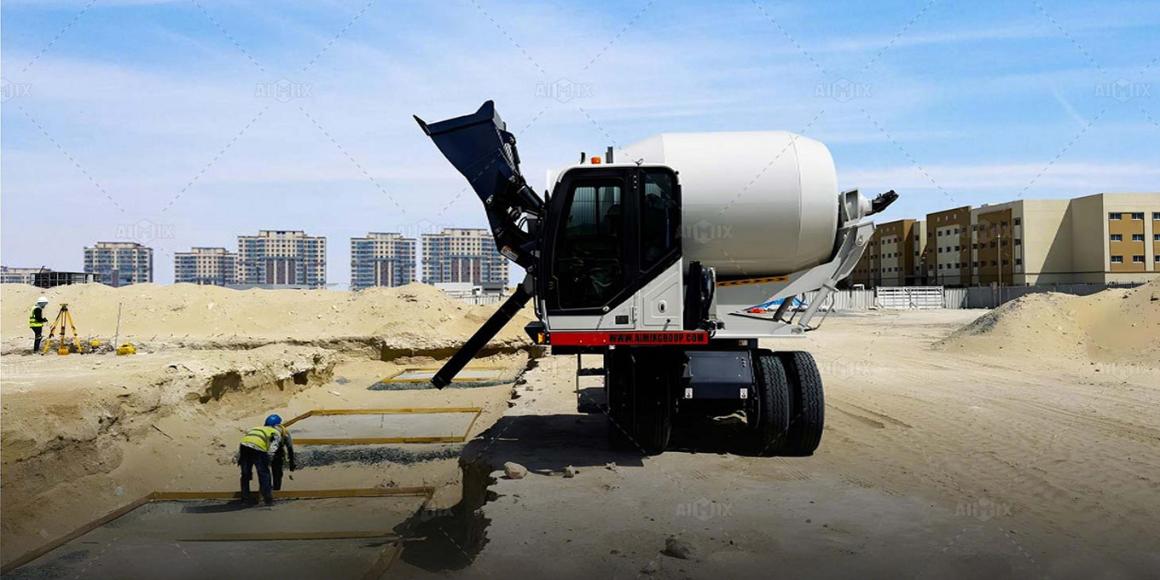
Self Loading Concrete Mixer Dubai: Reliable Mixing Even at High Temperatures
The Dubai construction sector operates under extreme thermal conditions. Ambient temperatures exceed 45°C during summer months. Surface temperatures on equipment can reach 70°C. Concrete mixing is temperature-sensitive. High temperatures accelerate cement hydration. Workability is lost. Cracking risk increases. A concrete self loading mixer operating in this environment must be engineered for thermal resilience. Standard machines designed for temperate climates will fail. Hydraulic fluids will overheat. Control electronics will malfunction. Concrete will set prematurely. This article analyses the specific design features that enable reliable self-loading mixer operation in Dubai's high-temperature environment. The analysis covers thermal management of mechanical systems, concrete temperature control, and operational protocols. The objective is to provide procurement professionals with the technical criteria necessary to select equipment suited to the Dubai climate.
Thermal Management of Mechanical Systems
The hydraulic system is the most heat-sensitive component of a self-loading mixer. Hydraulic fluid operating above 80°C loses viscosity. Lubrication is compromised. Seal degradation accelerates. Pump and motor life is reduced. Standard hydraulic systems are designed for ambient temperatures of 40°C or lower. In Dubai, ambient temperatures exceed 45°C. Solar radiation adds an additional 10 to 15°C to surface temperatures. The solution is an oversized hydraulic oil cooler. The cooler should have a capacity 30 to 50 percent greater than a standard unit. The cooling fan should be driven by a separate hydraulic motor or an electric motor. This arrangement allows the fan to operate at full speed even when the engine is at idle. The oil reservoir should be larger than standard. A larger reservoir increases the residence time of the oil, allowing more heat dissipation. The specification should include a thermostatic bypass valve that directs oil through the cooler only when the temperature exceeds a set point. This prevents overcooling during morning start-up.
The diesel engine is the second critical component. Engine coolant temperatures above 105°C cause overheating. The engine management system will derate power or shut down completely. The cooling system must be oversized for Dubai conditions. The radiator should have a core thickness of 4 to 6 rows. A standard radiator may have 2 to 3 rows. The fan should be of the suction type, drawing air through the radiator. The fan shroud must be tightly sealed to prevent recirculation of hot air. The cooling system should be filled with a 50/50 mixture of water and ethylene glycol antifreeze. The antifreeze raises the boiling point of the coolant. This is essential in high-temperature environments. The buyer should verify that the engine manufacturer has rated the cooling system for 50°C ambient temperature. Some manufacturers offer a "tropical" or "desert" cooling package. This package should be specified.
Concrete Temperature Control
Concrete temperature at placement should not exceed 35°C. Above this threshold, the risk of thermal cracking increases. Standard self loading mini cement mixers draw water from ambient-temperature storage tanks. In Dubai, water temperatures can exceed 40°C. The resulting concrete will exceed the temperature limit. The solution is active cooling of the mixing water. A water chiller can reduce water temperature to 5 to 10°C. The chiller is typically an add-on unit that connects to the mixer's water system. The chiller requires electrical power. A diesel-powered chiller is available for remote sites. For extreme conditions, a flake ice maker can replace a portion of the mixing water with ice. The ice absorbs heat as it melts, reducing concrete temperature by 5 to 10°C. The ice maker is more expensive than a chiller. It is also more effective. The buyer should select the cooling method based on the required concrete temperature and the available budget.
Passive cooling complements active systems. Aggregates stored in direct sunlight can reach temperatures of 60°C or more. Shading the aggregate stockpile reduces solar gain. A simple shade cloth or a steel roof reduces aggregate temperature by 10 to 15°C. The cost of shading is modest. The benefit is significant. The operator should also manage aggregate moisture. Hot aggregates absorb mixing water. The effective water-cement ratio may be lower than specified. This reduces workability. Moisture sensors in the aggregate bin can detect changes in moisture content. The control system should adjust water addition automatically. This feature is available on premium self-loading mixers. The buyer should specify it for Dubai applications.
Operational Protocols for High-Temperature Environments
The most effective thermal management strategy is to avoid the heat. Concrete should be poured at night. Ambient temperatures are 10 to 15°C lower after sunset. The operator should schedule pours between 8 PM and 6 AM. The self loading mixer in Dubai must be equipped with adequate lighting. LED work lights consume minimal power and provide good illumination. The crew should be trained for night work. The buyer should specify a lighting package as part of the machine configuration.
The mixing drum should be kept moist during downtime. A dry drum exposed to direct sunlight can reach temperatures exceeding 70°C. Adding water to the drum before loading the first batch reduces the initial concrete temperature. The operator should rotate the drum periodically during idle periods. This prevents concrete from setting in the drum during short breaks. The daily cleaning schedule is critical. Residual concrete left in the drum will harden rapidly in high temperatures. The operator should wash the drum immediately after the last pour. A pressure washer with a heated water supply is recommended. The heated water removes concrete more effectively than cold water.
The analytical conclusion is that self-loading concrete mixers can operate reliably in Dubai's high-temperature environment. The key is appropriate specification. Oversized cooling systems for hydraulics and engines. Active cooling for mixing water. Shading for aggregates. Night pouring schedules. Disciplined cleaning. The buyer who specifies these features will achieve reliable mixing. The buyer who does not will experience overheating, premature wear, and rejected concrete. The Dubai climate is demanding. The equipment must be engineered to meet that demand.
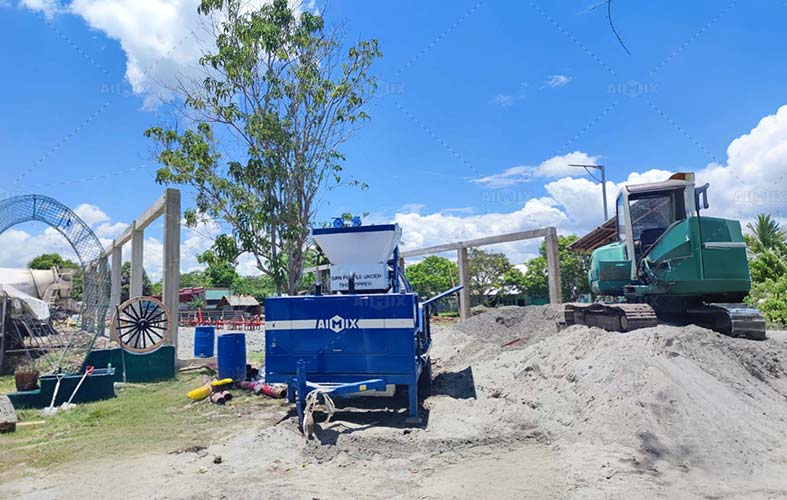
Mini Cement Mixer + Pump: Less Waiting, Less Labor, More Productivity
The traditional concrete placement method is a study in inefficiency. A truck arrives. It waits. It discharges into a wheelbarrow. The wheelbarrow is pushed across the site. The concrete is dumped. The wheelbarrow returns. The cycle repeats. The truck waits. The crew labours. The pour proceeds slowly. The mini cement mixer with an integrated pump changes this picture. It combines mixing and pumping into one machine. It eliminates the wheelbarrow. It reduces the crew. It speeds the pour. This article argues that the mini mixer pump is not a niche tool. It is a productivity machine. The creative argument is that waiting and labour are the two largest costs on a concrete pour. The mini concrete pump for sale attacks both. Let us count the ways.
Waiting: The Hidden Cost You Pay Every Hour
The Ready-Mix Truck Idle Time
A ready-mix truck arrives at a site. The crew is not ready. The forms are not complete. The pump is not set up. The truck waits. The clock ticks. The driver is paid. The truck's engine idles. The concrete in the drum continues to hydrate. The wait time is often 30 minutes to 2 hours. The cost is $100 to $400 per truck. The creative observation is that this waiting is invisible. It is not a line item on the invoice. It is buried in the delivered price. The contractor pays it anyway. The mini mixer pump eliminates the wait. The machine produces concrete when the crew is ready. Not before. Not after. Exactly when needed. No truck idle time. No driver waiting. No concrete setting in the drum. The saving is real.
The Pump Setup Delay
A line pump or boom pump requires setup. The hoses must be laid. The clamps must be tightened. The pump must be primed. The setup can take an hour. The crew stands ready. The concrete is ordered. The setup delay costs labour and schedule. The mini mixer pump is different. The hose is attached to the machine. The machine is positioned at the pour point. The operator starts the mixer. The concrete is pumped immediately. No separate setup. No waiting. The creative argument is that the mini mixer pump compresses the time between arrival and pouring. That compression is productivity.
Labour: The Crew You No Longer Need
The Wheelbarrow Team
A traditional concrete pour uses a crew of five to eight. One person directs the truck. Two to four push wheelbarrows. One spreads the concrete. One finishes. The wheelbarrow pushers are the bottleneck. They tire. They slow. They spill. The mini cement mixer with pump reduces the crew to two or three. One operator runs the machine. One spreads the concrete. One finishes. The pump delivers the concrete directly to the placement point. No wheelbarrows. No shovelling. No spillage. The creative observation is that labour is the largest cost on most construction sites. Reducing the crew by half saves thousands per pour. Those savings accumulate quickly.
The Cleanup Crew
After a pour, the mess remains. Wheelbarrows must be washed. Shovels must be cleaned. The truck chute must be scraped. The pump hoses must be flushed. The cleanup takes hours. The mini mixer pump cleans up faster. The drum is rinsed. The hose is flushed with a few litres of water. The machine is clean in minutes. The creative argument is that cleanup labour is often overlooked. It is not glamorous. It is necessary. The mini mixer pump reduces cleanup labour by 70 to 80 percent. That is time your crew can spend on the next pour.
Productivity: The Bottom Line
Cubic Meters Per Hour
The traditional method delivers 5 to 10 cubic meters per hour. The wheelbarrows limit the speed. The crew tires. The pace slows. The mini mixer pump delivers 10 to 20 cubic meters per hour. The pump does not tire. The hose does not slow. The concrete flows continuously. The creative observation is that doubling the placement rate doubles the number of pours per day. A contractor who could complete one slab per day can now complete two. The revenue doubles. The profit more than doubles. That is productivity. That is the mini mixer pump.
Access to Tight Sites
The ready-mix truck cannot fit into many sites. The small concrete pump for sale can. It is compact. It manoeuvres through gates. It reaches backyards. It climbs slopes. The creative argument is that the mini mixer pump enables pours that would otherwise be impossible. A contractor who owns one can bid on projects that competitors must decline. That is a competitive advantage. It is also a source of higher margins. Customers pay for access. The mini mixer pump provides it.
The creative conclusion is that the mini cement mixer with a pump is not a luxury. It is a productivity tool. It reduces waiting. It reduces labour. It increases output. The contractor who invests in one will pour more concrete per day, with fewer people, on more sites. The machine pays for itself in reduced costs and increased revenue. That is the argument. That is the math. Less waiting. Less labour. More productivity. The mini mixer pump delivers.
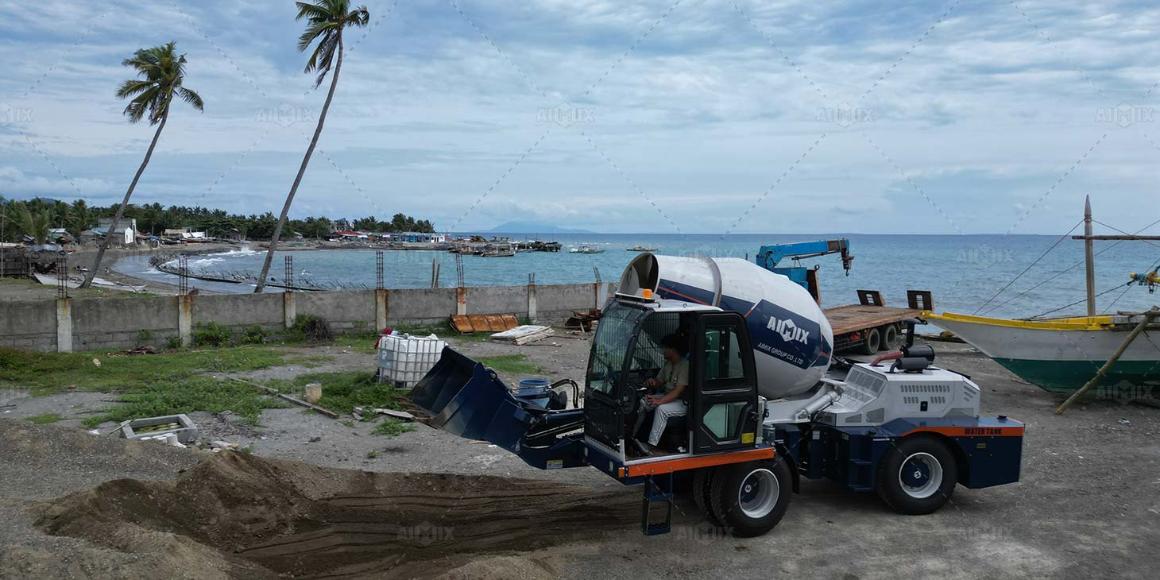
From AIMIX Branch to Your Site: Best Buying Price for Self Loading Concrete Mixer in Indonesia
The Indonesian archipelago presents a unique logistics challenge. Thousands of islands, congested ports, and varying road conditions make equipment delivery unpredictable. For contractors seeking a self loading concrete mixer, the buying process can feel overwhelming. Prices vary. Delivery times vary. Support varies. The argument of this article is that a local branch presence—such as AIMIX's operation in Indonesia—changes the equation. A supplier with a local branch offers transparency, reduced logistics costs, and responsive after-sales support. These factors combine to deliver a lower total cost of ownership, even if the initial machine price appears higher than a distant competitor. This article guides you through the process of securing the best buying price from a local branch. It focuses on three areas: understanding the landed cost, negotiating with local knowledge, and valuing after-sales support. The tone is caring. The advice is practical. The goal is to help you get the right machine at the right price without hidden surprises.
Understanding the Landed Cost: What You Actually Pay
Why a Local Branch Simplifies Pricing
A self-loading concrete mixer imported directly from China or Turkey carries a complex cost structure. The factory price is only the beginning. Add ocean freight, insurance, port handling, customs duties, inland transport, and value-added tax. Each step adds cost. Each step introduces uncertainty. A supplier with a local branch in Indonesia has already navigated these steps. They have imported a container of machines. They have paid the duties. They have cleared customs. They have transported the machines to a local warehouse. When you buy from that local branch, you pay a single price. The price includes the machine, the delivery to the branch, and the local VAT. You do not pay for freight, duties, or port fees separately. The argument is that a local branch price is a complete price. A direct import price is an incomplete price. The complete price may be higher. It is also predictable. Predictability has value.
Comparing Apples to Apples
To find the best buying price, you must compare complete prices. Ask the local branch for a Delivered Duty Paid (DDP) price to your site. This single number includes all costs. Ask the distant supplier for the same. If the distant supplier cannot provide a DDP price, ask for a Cost, Insurance, Freight (CIF) price to Jakarta or Surabaya. Then add estimated port charges (5-10 percent of the CIF value), customs duty (5-15 percent depending on classification), and VAT (11 percent in Indonesia). Add inland transport from the port to your site. The total will be significantly higher than the CIF price. The argument is that many contractors compare a local branch price to a distant supplier's factory price. This is an error. The distant supplier's factory price is not the final price. The local branch price is. When you add all costs, the local branch price is often competitive. The caring advice is to do the full calculation. Do not be misled by a low factory price that excludes most of the actual cost.
Negotiating with Local Knowledge
The Advantage of Face-to-Face Negotiation
A local branch offers the opportunity for face-to-face negotiation. You can visit the warehouse. You can see the self loading concrete mixer in Indonesia. You can meet the sales manager. This personal interaction changes the dynamic. A distant supplier communicates by email or WhatsApp. They have no relationship with you. They have no incentive to offer a discount. A local sales manager wants your business. They want you to return for spare parts. They want you to recommend them to other contractors. They have flexibility on price, especially for a cash purchase or a multi-machine order. The argument is that the best buying price is not always the lowest number on a quote. It is the price that comes with a relationship. A local branch offers that relationship. Use it.
Timing Your Purchase for Best Price
A local branch has inventory. Inventory costs money. The branch pays for warehouse space, insurance, and financing. They want to turn that inventory into cash. The caring advice is to ask about seasonal promotions. Ask about discounts for machines that have been in stock for several months. Ask about package deals that include a spare parts kit or operator training. The branch manager has authority to offer these deals. A distant supplier does not have the same flexibility. They ship direct from the factory. They have no inventory carrying cost to incentivise a discount. The argument is that a local buyer can negotiate from a position of strength. The seller wants to move inventory. The buyer wants a good price. A meeting of interests is possible.
The Value of After-Sales Support
Parts Availability and Local Technicians
The best buying price is not only about the initial purchase. It is about the total cost over the life of the machine. A self-loading mixer needs spare parts. Blades. Hydraulic hoses. Filters. A local branch stocks these parts. You can buy them over the counter. You can have them delivered the next day. A distant supplier requires you to order parts online. Shipping takes weeks. Customs clearance adds delays. The machine sits idle. The lost production costs far more than the parts. The argument is that a local branch may charge a slightly higher price for the machine. That premium buys you parts availability. It buys you local technicians who can diagnose problems. It buys you uptime. Uptime is revenue. The caring advice is to value after-sales support as part of the price. Do not buy a machine that leaves you stranded.
Training Your Operators
The final element of after-sales support is training. A local branch can send a technician to your site. They can spend a day with your operator. They can explain the controls. They can demonstrate the weighing system. They can show the daily maintenance routine. This training reduces operator errors. It extends machine life. It improves safety. The cost of training is often included in the machine price when you buy from a local branch. A distant supplier may offer training at the factory. They will not send a technician to Indonesia. The caring argument is that training is not an extra. It is an essential part of the purchase. The best buying price includes training. The lowest price excludes it. Choose the self loading concrete mixer price that includes the support you need.
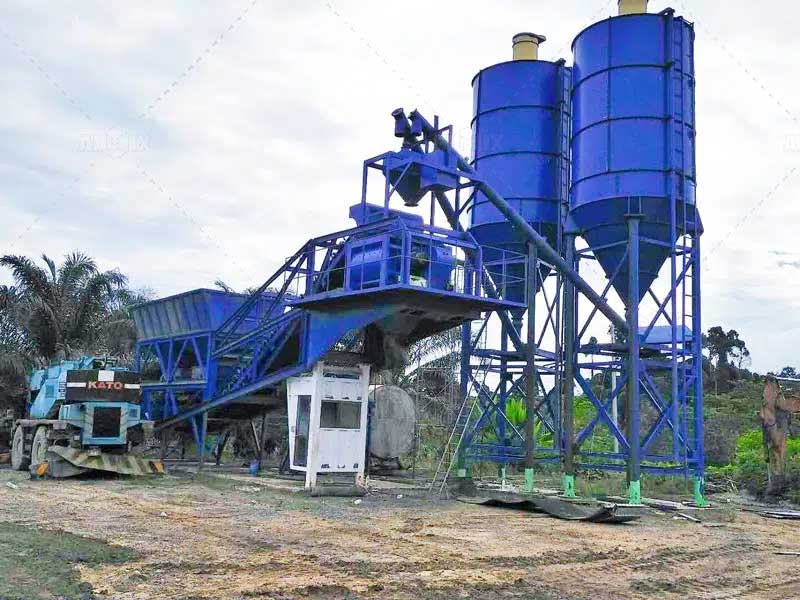
Payback Period for a Ready-Mix Plant: Saudi Market Insights
The question arrives in every contractor's inbox eventually. How long until my ready mix plant pays for itself? The answer is not a single number. It is a range. A spectrum. A story told by utilisation rates, market prices, and operating discipline. In Saudi Arabia, where the construction market pulses with megaprojects and suburban development alike, the payback period for a ready-mix plant can be as short as 18 months or as long as 5 years. The difference is not luck. It is strategy. This article unpacks the variables that drive payback. We will look at capacity, location, sales price, and cost structure. We will build a model you can adapt to your own business plan. The goal is not to give you a single answer. It is to give you the tools to find your own answer. Let us crunch some numbers.
The Baseline Calculation: Assumptions and Variables
Capital Investment and Operating Costs
Let us start with a typical scenario. A medium-sized ready-mix concrete batching plant in Saudi Arabia—say, 60 cubic meters per hour capacity—costs SAR 1.2 million to SAR 1.8 million fully installed. That includes the plant itself, cement silos, aggregate bins, a wheel loader, and initial spare parts. Annual operating costs include electricity (SAR 100,000 to SAR 200,000), labour (SAR 300,000 to SAR 500,000 for operators, loaders, and admin), maintenance (SAR 50,000 to SAR 100,000), and trucking if you own your fleet (SAR 500,000 to SAR 1 million for 5 to 7 trucks). The total annual operating cost, excluding capital depreciation, ranges from SAR 950,000 to SAR 1.8 million. The wide range reflects choices. A plant that rents trucks has lower fixed costs but higher variable costs per cubic meter. A plant that owns its fleet has higher fixed costs but lower variable costs. There is no right answer. There is only the right answer for your market and your risk tolerance.
Revenue Per Cubic Meter and Utilisation
Revenue depends on two factors. The selling price per cubic meter of ready-mix concrete. And the number of cubic meters sold annually. In Saudi Arabia, standard C30 concrete sells for SAR 250 to SAR 350 per cubic meter, depending on the region and the customer. Premium mixes command higher prices. The plant's utilisation rate—the percentage of its capacity actually sold—is the leverage point. A 60 cubic meter per hour plant operating one shift (2,000 hours annually) at 60 percent utilisation produces 72,000 cubic meters per year. At SAR 300 per cubic meter, revenue is SAR 21.6 million. The same plant at 40 percent utilisation produces 48,000 cubic meters and SAR 14.4 million in revenue. The difference in revenue is SAR 7.2 million. The difference in operating cost is minimal. Utilisation is the master variable. It determines payback more than any other factor.
Payback Scenarios: From Optimistic to Conservative
Optimistic Scenario: High Utilisation, Premium Pricing
Let us paint an optimistic picture. A contractor secures a long-term supply agreement for a major infrastructure project. The plant operates at 80 percent utilisation. The selling price averages SAR 320 per cubic meter. Annual production is 96,000 cubic meters. Revenue is SAR 30.7 million. Operating costs (excluding capital) are SAR 1.5 million. Gross profit is SAR 29.2 million. Even after deducting trucking costs of SAR 800,000, the gross profit remains substantial. A plant costing SAR 1.5 million pays for itself in less than one month. That is not a typo. High utilisation and premium pricing create extraordinary returns. The challenge is achieving them. Long-term contracts are not handed out freely. They are earned through relationships, quality, and reliability. The optimistic scenario is achievable. It is not automatic.
Moderate Scenario: Steady Work, Competitive Pricing
A more typical scenario. The contractor supplies multiple housing developments and commercial projects. Utilisation is 50 percent. Selling price is SAR 280 per cubic meter. Annual production is 60,000 cubic meters. Revenue is SAR 16.8 million. Operating costs are SAR 1.2 million. Trucking costs are SAR 600,000. Gross profit is SAR 15 million. The wet mix plant cost of SAR 1.5 million is paid back in about 1.2 months. Again, the payback is remarkably short. Why? Because the gross margin on ready-mix concrete is high when the plant is operating. The fixed costs are relatively low compared to revenue. The risk is not profitability. The risk is utilisation. A plant that operates at 50 percent utilisation is highly profitable. A plant that operates at 20 percent utilisation may struggle to cover its fixed costs. The payback period extends dramatically as utilisation falls.
Conservative Scenario: Low Utilisation, Price Pressure
Consider a difficult market. Multiple competitors bid on the same projects. Prices fall to SAR 240 per cubic meter. Utilisation is 30 percent. Annual production is 36,000 cubic meters. Revenue is SAR 8.6 million. Operating costs are SAR 1 million. Trucking costs are SAR 400,000. Gross profit is SAR 7.2 million. The plant cost of SAR 1.5 million is paid back in about 2.5 months. Even in this conservative scenario, the payback period is short. The conclusion is striking. A ready-mix plant in Saudi Arabia, once operational, pays for itself within a few months under most reasonable assumptions. The challenge is not the payback period. The challenge is reaching the utilisation level that makes the plant viable. A plant that sits idle does not pay back. A plant that operates does.
Beyond the Numbers: Market Realities
The Barrier to Entry Is Not the Plant
The trendy insight is this. The ready-mix plant is not the barrier to entry. The barrier is securing customers. A contractor can finance a plant. A contractor can hire operators. A contractor cannot easily secure long-term supply agreements. The established players have relationships. They have reputations. They have the trust of major developers. The new entrant must build these assets. The payback period calculation assumes utilisation. Utilisation requires customers. Customers require trust. Trust requires time. The respectful advice is to spend as much effort on sales and relationship building as on plant selection. The plant is a tool. The customer relationships are the business.
Location, Location, Location
The final variable is location. A plant located near a cluster of active projects will achieve higher utilisation than a plant in a remote area. The cost of transporting concrete limits the effective radius to 30 to 45 minutes of travel time. A plant in eastern Riyadh cannot efficiently serve western Riyadh. The contractor must choose a location that balances land cost against access to customers. A plant on expensive land but near many projects may be more profitable than a plant on cheap land with few customers. The payback period calculation must include the cost of transport. A plant that requires long truck hauls has higher operating costs and lower effective capacity. The trendy advice is to map the customer base before selecting the plant location. The map will tell you where to build. The payback period will follow.
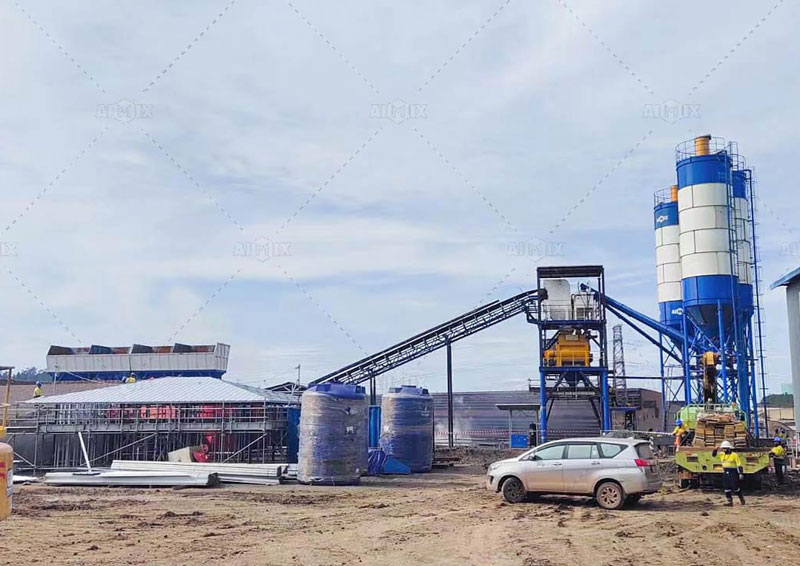
What Your Concrete Batching Plant Cost Says About Your Profit Margins
The relationship between capital expenditure and operating profit is rarely linear. In the concrete batching plant industry, this nonlinearity is particularly pronounced. A plant that costs twice as much to acquire does not necessarily yield half the profit margin. Conversely, a plant acquired at a bargain price often conceals operating penalties that erode profitability over time. The argument advanced here is that the initial cost of concrete batching plant is a diagnostic indicator. It reveals assumptions about quality, durability, and operating efficiency. These assumptions manifest in the profit and loss statement. This article analyses three cost tiers—low, medium, and premium—and traces their implications for margin structure. The objective is to equip buyers with an analytical framework for interpreting price quotes, not as isolated numbers, but as predictors of long-term financial performance.
The Low-Cost Plant: Apparent Savings, Hidden Penalties
Thin Steel and Premature Structural Failure
A concrete batching plant priced significantly below market average achieves that price through material substitutions. The steel frame is fabricated from thinner gauge sections. The mixer drum uses 6mm liner plates rather than 10mm. The cement silo lacks internal aeration pads. These substitutions reduce the manufacturer's cost. They also reduce the plant's service life. A standard plant may operate for 15 years with proper maintenance. A low-cost plant may require major structural repairs within 5 years. The cost of these repairs—replacing corroded sections, reinforcing undersized beams—often exceeds the initial price saving. The profit margin impact is twofold. First, the owner incurs unplanned capital expenditure. Second, downtime during repairs reduces revenue. The margin erosion from a single extended repair event can wipe out the perceived saving from the lower purchase price of concrete batching plant. The analytical buyer recognises that a low concrete batching plant cost is frequently a deferred expense, not a genuine economy.
Inefficient Motors and Fuel Consumption
The second hidden penalty of low-cost plants is energy inefficiency. Standard motors with IE1 or IE2 efficiency ratings consume 10 to 20 percent more electricity than IE3 or IE4 premium efficiency motors. A plant operating 2,000 hours annually with a connected load of 150 kilowatts consumes 300,000 kilowatt-hours per year. A 15 percent efficiency difference represents 45,000 kilowatt-hours. At $0.12 per kilowatt-hour, this is $5,400 annually. Over ten years, the difference exceeds $50,000. The low-cost plant saves perhaps $30,000 on the purchase price. It costs $50,000 more in electricity. The net effect is negative margin. The buyer who focuses solely on concrete batching plant cost without examining motor efficiency specifications is making an analytical error that will compound annually.
The Mid-Range Plant: Optimised Life-Cycle Cost
Balanced Specification and Maintainability
The mid-range plant occupies the optimal position on the cost-margin curve. Its purchase price is 30 to 50 percent higher than the low-cost alternative. Its operating costs are substantially lower. The specification includes IE3 motors, 8mm to 10mm liner plates, and a control system with diagnostic capabilities. The structural design incorporates maintenance access—platforms, ladders, and lighting. These features reduce the labour cost of inspections and repairs. A plant that can be serviced in 2 hours rather than 8 hours reduces maintenance labour cost by 75 percent per event. Over the plant's life, this difference accumulates. The margin advantage of the mid-range plant is not visible in the purchase price. It is visible in the monthly operating statement. Lower electricity bills. Lower repair parts consumption. Lower labour cost. Higher uptime. The analytical buyer calculates the present value of these operating savings. The mid-range plant almost always outperforms the low-cost alternative on a net present value basis, assuming a five-year or longer holding period.
Resale Value and Capital Recovery
The second margin advantage of the mid-range plant is resale value. A well-maintained plant from a recognised manufacturer retains 40 to 60 percent of its purchase price after ten years. A low-cost plant from an obscure manufacturer may have no resale market. The owner must scrap it or accept a nominal offer for spare parts. The difference in capital recovery is substantial. A $500,000 mid-range plant sold for $250,000 after ten years has a net capital cost of $250,000. A $350,000 low-cost plant sold for $50,000 has a net capital cost of $300,000. The low-cost plant was cheaper to buy. It was more expensive to own. The margin impact is direct. The owner who fails to consider resale value when comparing concrete batching plant cost is omitting a material financial variable.
The Premium Plant: Diminishing Returns for Most Operators
Specialised Features and Their Payback Period
The premium plant costs 100 to 200 percent more than the mid-range alternative. It includes features such as fully automated control systems, remote monitoring, stainless steel chutes, and ceramic-lined mixer wear parts. These features deliver value in specific operating contexts. A plant operating three shifts daily, seven days weekly, with unskilled labour may benefit from full automation. A plant operating one shift with experienced operators may not. The analytical buyer calculates the payback period for each premium feature. A $50,000 automation package that reduces labour cost by $10,000 annually has a five-year payback. That is acceptable. A $50,000 automation package that reduces labour cost by $2,000 annually has a 25-year payback. That is not acceptable. The argument is not that premium plants are never justified. The argument is that their margin advantage is context-dependent. The buyer who purchases a premium plant without analysing feature-specific payback periods is likely over-investing. The incremental concrete batching plant cost will not be recovered through incremental margin.
Brand Premium and Market Perception
The final consideration is brand value. A premium concrete batching plant manufacturer commands higher prices because of perceived quality, reliability, and resale value. This perception has some basis in engineering. It also has some basis in marketing. The analytical buyer distinguishes between genuine engineering advantages and brand-driven price premiums. A plant with genuine advantages—superior welding procedures, documented quality control, extensive testing—may justify a premium. A plant with identical components and a different nameplate does not. The margin impact of overpaying for brand is direct. The owner pays more for the same productive capacity. The profit per cubic meter is lower. The analytical buyer requests component specifications, testing documentation, and quality control records. They compare these data across suppliers. They pay for demonstrated value, not for brand mystique. This discipline protects margin. It also ensures that the concrete batching plant cost is an investment in profitability, not a donation to marketing budgets.
The Australia-Scale Blueprint: What "Large Capacity" Should Actually Mean for Your Concrete Batching Plant
Australia does things differently. The distances are vast. The heat is brutal. The projects are either enormous mining camps or sprawling suburban estates. A "large capacity" plant in Europe might mean 60 cubic meters per hour. That is a morning tea break in the Pilbara. I am going to argue that the industry has misled you. Suppliers throw around the term "high capacity" like confetti. But real scale is not just about peak output. It is about sustained output under Australian conditions. It is about surge capacity for those days when the concrete pump is waiting and the formwork is ready. It is about redundancy so that one failed sensor does not shut down a million-dollar pour. This article is my blueprint. My subjective, hard-won view of what large capacity actually means for an Australian concrete batching plant for sale. Forget the brochures. Listen to someone who has seen plants thrive and fail in this unique market.
Redefining "Large Capacity": Beyond the Cubic Meter
Let me set a marker. In my opinion, a "large capacity" plant in Australia starts at 120 cubic meters per hour. Not 90. Not 100. 120. Why this number? Because it gives you real surge capability. A typical Australian concrete pump can place 60 to 80 cubic meters per hour. Your plant needs to stay ahead of the pump. If the pump waits, you lose money. A 120 m³/h plant runs at 60% capacity to feed the pump. It has headroom. A 90 m³/h plant runs at 90% capacity. There is no margin. The moment a batch takes an extra minute, the pump is idle. The 120 m³/h plant also handles peak demand. When the project schedule compresses, you can push the plant to 100 or 110 m³/h for short periods. The 90 m³/h plant has nowhere to go. It is already at its limit. So my first instruction is this. Do not accept a supplier's definition of large capacity. Demand 120 m³/h as the minimum. Your future self will thank you.
Here is the dirty secret of the industry. The capacity number on the brochure is a theoretical maximum. It assumes perfect conditions. Ideal aggregate moisture. Fresh cement. No screen blinding. An operator who never blinks. Real Australian conditions are different. The aggregate might be wet from rain. The cement might be hot from the silo. The operator needs a bathroom break. A plant that claims 120 m³/h theoretical might deliver 90 m³/h sustained. A truly large capacity plant is designed for sustained output. It has larger aggregate bins so the loader is not constantly refilling. It has faster discharge systems so the concrete trucks do not queue. It has redundant pumps and motors so a single failure does not halve production. When I evaluate a plant, I ignore the theoretical number. I ask for real-world data from Australian sites. That number is the only one that matters. Insist on it.
Australia-Scale Components: Size, Redundancy, and Environment
A large capacity plant needs large appetite. The aggregate bins are the stomach. A small concrete batch plant for sale might have 20-tonne bins. That is inadequate for Australia. You will spend half your day waiting for the loader to refill. My rule is simple. Each aggregate bin should hold at least 60 tonnes. For a four-bin plant, that is 240 tonnes of storage. A 300-tonne total capacity is better. This allows you to receive a full semi-trailer of each aggregate without stopping production. The loader can refill during the lunch break. The plant never waits for material. The cost of larger bins is real. Add $50,000 to $100,000 to the plant price. The cost of waiting for material is also real. Add up the loader time, the operator idle time, the extended pour durations. The larger bins pay for themselves within two years on a busy site. Do not compromise on this.
Australia is remote. A failed sensor does not mean a quick trip to the local supplier. It means waiting three days for a part from Melbourne or Perth. Redundancy is not a luxury. It is insurance. A large capacity plant should have dual cement screw conveyors. If one jams, the other keeps the plant running. It should have dual water pumps. If one fails, the other takes over. It should have a backup control system. If the main computer crashes, a secondary system runs basic operations. This redundancy adds 15% to 25% to the equipment cost. I argue it is essential. I have seen projects delayed for a week because a $200 sensor failed. The cost of that week exceeded the cost of redundancy many times over. Specify redundancy. Write it into the contract. AIMIX and other serious suppliers offer these options. Do not let a salesperson talk you out of them.
Environmental and Logistical Realities
The Australian sun is not kind. A plant that works in Germany or the UK may struggle in Western Australia or Queensland. Heat affects electronics. Dust clogs filters. Humidity corrodes contacts. A large capacity plant for Australia must be specified for the environment. This means high-temperature-rated motors. IP65 or higher enclosures for electrical panels. Oversized radiators for hydraulic systems. Dust extraction systems that actually work. The cost premium for "tropicalised" or "desert-spec" equipment is typically 10% to 20%. In my experience, it is money well spent. A concrete batching plant in Australia that fails in January because the control system overheated is not a bargain at any price. Ask the supplier about their experience in hot, dusty environments. Ask for references from Australian sites. If they cannot provide them, be very careful.
Finally, consider the logistics of getting a large capacity plant to your site. A 120 m³/h ready mix concrete plant weighs 50 to 80 tonnes. It arrives in multiple shipping containers or on flatbed trucks. Delivery from the port of Brisbane or Fremantle to a remote site can take weeks and cost tens of thousands of dollars. Installation requires a crane, a team of technicians, and time. My instruction is to add 50% to the supplier's estimated lead time. If they say 12 weeks, plan for 18. If they say 6 weeks, plan for 9. Delays are not failures. They are realities. Build them into your project schedule. And when the plant finally arrives, running, producing concrete, you will understand what "large capacity" truly means. It means the confidence to pour. The ability to scale. The resilience to keep going when conditions are hard. That is the Australia-scale blueprint. Follow it.
Site-Ready Foundations? Why Foundation-Free Concrete Plant Systems Are Rising in Middle East Developments
The adoption of foundation-free concrete plant systems represents a paradigm shift in construction methodology across the Middle East, challenging traditional assumptions about equipment installation and site preparation. These innovative systems eliminate the need for extensive civil works, concrete foundations, and prolonged site preparation that have historically characterized batching plant deployment. The regional construction landscape, characterized by ambitious timelines, challenging ground conditions, and increasing emphasis on project mobility, has created ideal conditions for this technological evolution. Foundation-free concrete batch plants for sale utilize sophisticated engineering principles to distribute operational loads directly to the ground surface through engineered support systems, bypassing the traditional foundation cycle that can consume weeks of critical project time. This analysis examines the technological, economic, and operational drivers behind the increasing prevalence of these systems in Middle Eastern developments, providing insight into a trend that is reshaping concrete production logistics in one of the world's most dynamic construction markets.
Technological Innovation and Structural Engineering Principles
Foundation-free concrete plant systems represent a convergence of advanced structural engineering, materials science, and geotechnical understanding. These systems employ sophisticated load distribution mechanisms that transfer operational forces directly to the ground surface through engineered support structures. The core technology typically involves modular steel frameworks with integrated hydraulic leveling systems that create a stable platform without penetrating the subsurface. These frameworks incorporate load-spreading footings that distribute vertical forces across a sufficiently large surface area to remain within the safe bearing capacity of the native soil. Lateral stability is achieved through geometric design and strategic bracing rather than deep foundations, with some systems utilizing ground anchors that provide temporary restraint without the permanence of traditional concrete footings. The structural engineering behind these systems represents a fundamental rethinking of how heavy industrial equipment interacts with the ground, prioritizing surface engagement over subsurface embedment.
The materials innovation supporting foundation-free systems extends beyond structural frameworks to encompass the interface between equipment and ground. High-strength composite mats, engineered geotextile layers, and specialized bearing pads create a stable working surface that distributes loads while protecting the underlying soil from compaction and degradation. These materials are specifically engineered for the environmental conditions prevalent in the Middle East, with enhanced UV resistance, temperature stability, and durability in sandy, abrasive environments. The integration of real-time monitoring systems provides continuous feedback on ground settlement, equipment level, and load distribution, enabling automatic adjustments to maintain optimal operating conditions. This technological sophistication transforms what appears to be a simple surface-mounted system into a highly engineered solution that achieves stability through distributed intelligence rather than mass concrete. The result is a concrete production facility that can be operational within days rather than weeks, with technical capabilities matching or exceeding traditionally founded plants in most applications.
Economic Rationale and Project Timeline Acceleration
The economic rationale for foundation-free concrete plant systems in the Middle East is compelling, driven primarily by dramatic reductions in project lead times and associated costs. Traditional ready mix concrete plant installation typically requires 4-8 weeks for site preparation, foundation construction, curing, and equipment mounting. Foundation-free systems can be commissioned in 3-7 days, creating a time advantage of 3-7 weeks that translates directly to earlier project revenue generation. This accelerated timeline is particularly valuable in fast-track developments where concrete production represents a critical path activity. The cost savings extend beyond time value to include direct expense reductions of 15-30% in plant installation costs, achieved through elimination of excavation, formwork, reinforcement, concrete placement, and curing processes. These savings are especially significant in regions with high labor costs or where specialized foundation construction expertise carries premium pricing.
The economic benefits of foundation-free systems extend throughout the project lifecycle, creating value beyond the initial installation phase. The modular nature of these systems enables redeployment to subsequent projects with minimal disassembly and reconfiguration costs, typically 40-60% lower than relocating a traditionally founded plant. This redeployability transforms the concrete plant from a project-specific expense to a reusable capital asset that can service multiple developments. The reduced site disturbance associated with foundation-free installation minimizes site restoration costs at project completion, particularly valuable in environmentally sensitive areas or urban infill developments. Financing considerations further enhance the economic appeal, as the shorter installation period reduces interest costs during construction and enables earlier revenue generation to service debt. The comprehensive economic analysis reveals that foundation-free systems provide superior return on investment across multiple metrics, with payback periods typically 30-50% shorter than traditional installations. This economic advantage has become increasingly compelling as Middle Eastern developers pursue more aggressive project timelines and tighter capital efficiency targets.
Operational Flexibility and Site Adaptability
The operational flexibility of foundation-free concrete plant systems represents a significant advantage in the diverse and challenging site conditions encountered across Middle Eastern developments. These systems can be deployed on sites with poor soil conditions, high water tables, or contaminated ground where traditional foundations would require extensive and costly ground improvement. The ability to position plants on compacted sand, engineered fill, or temporary working platforms expands siting options and enables optimal plant placement relative to material sources and placement areas. This flexibility is particularly valuable in congested urban developments or linear infrastructure projects where space constraints limit traditional plant siting options. The modular design enables configuration adjustments to match specific project requirements, with capacity expansion or reduction achieved through addition or removal of modular components rather than structural modification.
Site adaptability extends to environmental considerations that are increasingly important in Middle Eastern developments. Foundation-free systems minimize ground disturbance, reducing the environmental impact of plant installation and facilitating site restoration upon demobilization. The absence of permanent foundations eliminates long-term soil contamination concerns and enables complete site remediation. The systems' mobility supports phased development strategies, allowing the concrete plant to be relocated as the project progresses rather than serving a fixed location throughout the construction period. This mobility enhances operational efficiency by minimizing material transport distances as work fronts advance. The adaptability to temporary sites enables developers to utilize concrete production capacity for multiple small to medium projects without the commitment of permanent installation, creating new business models for concrete supply in the region. This operational flexibility has proven particularly valuable in the Middle East's dynamic development environment, where project parameters frequently change and adaptive response capability provides competitive advantage.
Regional Market Drivers and Implementation Trends
The rapid adoption of foundation-free concrete plant systems in the Middle East is driven by a convergence of regional market characteristics that create ideal conditions for this technology. The prevalence of fast-track megaprojects, particularly in Saudi Arabia and the United Arab Emirates, has created intense pressure to accelerate all aspects of project delivery, making the time savings offered by foundation-free systems particularly valuable. The region's predominant soil conditions—primarily sand and sandy gravel with generally good bearing capacity—are well-suited to surface-mounted systems that distribute loads effectively without deep foundations. The climate, characterized by minimal frost penetration and rare seismic activity, reduces the geotechnical challenges that might necessitate traditional foundations in other regions. These regional characteristics have enabled foundation-free technology to demonstrate its capabilities in optimal conditions, accelerating market acceptance and implementation.
Implementation trends reveal distinct patterns in how foundation-free systems are being deployed across different Middle Eastern markets. In Saudi Arabia, the technology has gained particular traction in giga-projects and remote infrastructure developments where speed of deployment and redeployability are paramount. The United Arab Emirates has seen widespread adoption in urban redevelopment projects where site constraints and environmental considerations favor minimal ground disturbance. Qatar's implementation has focused on temporary facilities for tournament infrastructure and associated developments. Across the region, there is a clear trend toward larger capacity foundation-free wet mix concrete plant, with systems now available for production capacities exceeding 200 cubic meters per hour. The technology is increasingly integrated with advanced automation and control systems, creating highly sophisticated surface-mounted production facilities that rival traditional plants in capability while surpassing them in flexibility. This market evolution reflects a fundamental shift in how the regional construction industry approaches concrete production logistics, with foundation-free systems moving from niche applications to mainstream solutions for an expanding range of project types and scales.
Performance Validation and Quality Assurance
The performance of foundation-free concrete plant systems has been rigorously validated through extensive field testing and implementation across diverse Middle Eastern projects. Load testing protocols have demonstrated that properly engineered systems maintain stability and alignment under full operational loads, with deflection measurements within acceptable parameters for precise batching operations. Vibration analysis confirms that dynamic loads from mixing operations and material handling are effectively dampened without transmitting harmful frequencies to surrounding structures. Production quality metrics, including batching accuracy, mixing homogeneity, and concrete consistency, show no statistically significant difference between foundation-free and traditionally founded plants when systems are properly installed and maintained. This performance validation has been essential for gaining engineering approval and regulatory acceptance across the region, addressing initial skepticism about the capability of surface-mounted systems to support precision concrete production.
Quality assurance protocols for foundation-free systems have evolved to address their unique characteristics while maintaining the rigorous standards required for construction materials production. Installation verification procedures focus on ground preparation, leveling accuracy, and load distribution verification rather than foundation integrity inspection. Ongoing monitoring utilizes embedded sensors to track settlement, alignment, and load distribution throughout the operational period, with automated alerts triggered by parameters exceeding design tolerances. Maintenance protocols emphasize the inspection of load-bearing surfaces, leveling systems, and structural connections that experience different stress patterns than traditional founded structures. These adapted quality assurance approaches have proven effective in ensuring reliable long-term performance, with documented case studies showing operational lifespans exceeding project durations without significant maintenance interventions. The accumulation of performance data and quality assurance experience has built confidence in the technology, enabling its application on increasingly critical projects where concrete quality directly influences structural performance and project success.
Future Development and Technology Evolution
The future development of foundation-free concrete plant systems in the Middle East will be shaped by ongoing technological evolution and expanding application boundaries. Material science advancements are enabling lighter, stronger support structures with enhanced corrosion resistance for the region's challenging environmental conditions. Integration with renewable energy systems, particularly solar power generation, is creating self-sufficient concrete production facilities that can operate independently of grid infrastructure in remote locations. Digital twin technology is being employed to simulate plant performance under various ground conditions and loading scenarios, optimizing designs for specific site characteristics. These technological advancements are expanding the capability envelope of foundation-free systems, enabling applications in more challenging environments and for larger capacity requirements than previously feasible.
The application of foundation-free technology is expanding beyond standard batching plants to encompass specialized concrete production systems. Mobile volumetric mixers, stabilized soil plants, and precast concrete production facilities are being developed with foundation-free configurations, bringing the benefits of rapid deployment and redeployability to additional segments of the construction materials industry. The integration of advanced automation and Industry 4.0 technologies is creating intelligent surface-mounted plants that optimize their own performance based on real-time conditions. This technology evolution is supported by the development of regional manufacturing capabilities, with several Middle Eastern countries establishing production facilities for foundation-free system components. The convergence of these trends suggests that foundation-free technology will continue to gain market share, potentially becoming the default solution for temporary and semi-permanent concrete production across the region. This evolution represents not merely an incremental improvement in plant installation methodology, but a fundamental reimagining of how industrial facilities interact with their sites, with implications extending beyond concrete production to other temporary industrial installations in the construction sector and beyond.
Conclusion: Redefining Site Readiness in Middle Eastern Construction
The rise of foundation-free concrete plant systems in the Middle East represents a significant redefinition of site readiness and equipment deployment methodology. This technology has demonstrated that extensive civil works and permanent foundations are not prerequisites for high-capacity, precision concrete production. The convergence of technological innovation, economic imperative, and regional market characteristics has created ideal conditions for the adoption and refinement of these systems. The benefits—accelerated project timelines, reduced installation costs, enhanced operational flexibility, and improved site adaptability—have proven compelling across the diverse project portfolio that characterizes Middle Eastern development. As the technology continues to evolve and application experience accumulates, foundation-free systems are transitioning from innovative alternatives to established solutions for concrete production logistics. This trend reflects a broader movement toward modular, mobile, and adaptive construction methodologies that prioritize speed, efficiency, and flexibility in response to the region's ambitious development agenda. The foundation-free concrete plant has emerged as both a symbol and an enabler of this transformation, demonstrating that in the right conditions, with appropriate engineering, industrial facilities can indeed stand firmly on the surface, ready to support the structures that will define the Middle Eastern skyline for generations to come.
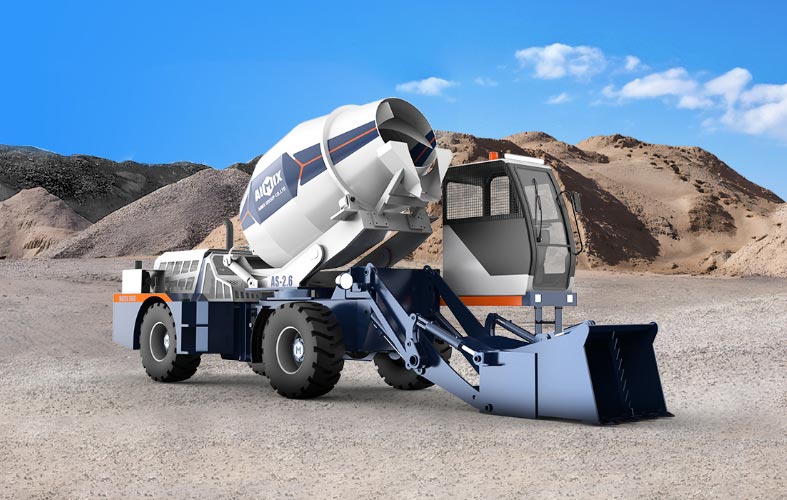
Beyond Traditional Batching: Ethiopia's Move Toward On-Site Self Loading Mixer Solutions
The Ethiopian construction landscape is undergoing a quiet but consequential metamorphosis. For decades, the production of concrete in this rapidly urbanizing nation adhered to a familiar, albeit inefficient, paradigm: centralized batching plants churning out material that was then ferried across the congested and often unpaved roads of Addis Ababa and its burgeoning satellite cities. This model, imported from more industrialized economies, has struggled to adapt to Ethiopia's unique topography, infrastructure deficits, and the decentralized nature of its construction boom. The result has been chronic delays, inconsistent concrete quality, and a significant portion of project budgets consumed by logistics rather than materials. Enter the self loading concrete mixer—a machine that collapses the traditional batching process into a single, mobile, and remarkably autonomous unit. Its emergence in the Ethiopian market represents more than the arrival of new equipment; it signifies a philosophical departure from centralized production toward on-site, just-in-time concrete manufacturing. For contractors working on dispersed housing developments, rural road networks, or infrastructure projects in regions where a stationary plant is an economic impossibility, the self-loading mixer offers a pathway to productivity that traditional batching could never provide. This transition, still in its early stages, is already reshaping how Ethiopian builders think about project logistics, quality control, and the very definition of a concrete plant.
The Limitations of Centralized Batching in the Ethiopian Context
The conventional wisdom that larger, centralized batching plants deliver superior efficiency collapses when examined through the lens of Ethiopia's operational realities. A stationary plant, for all its technological sophistication, remains an immobile asset. Once constructed—typically in an industrial zone on the periphery of a major city—its radius of economical delivery is sharply constrained by both time and distance. Concrete, unlike other construction materials, has a finite window of workability. In the highland terrain surrounding Addis Ababa, where elevation changes are dramatic and roads are frequently narrowed by informal market activity, a transit mixer might require ninety minutes to traverse a distance that a GPS would estimate at thirty minutes. By the time that concrete arrives at a housing development in a suburb like Sululta or a commercial project in the rapidly expanding corridor toward Bishoftu, its slump has degraded, its temperature has risen, and its placement characteristics have been compromised. Furthermore, the capital investment required for a traditional batching plant—land acquisition, silos, conveyors, batching controls, and a fleet of transit mixers—places it beyond the reach of the small-to-medium contractors who execute the majority of Ethiopia's building projects. This centralization creates a market bifurcation where large state-owned enterprises and international contractors control the ready-mix supply, while smaller operators resort to labor-intensive site mixing with its attendant quality inconsistencies and material wastage.
The Self-Loading Mixer as a Decentralization Catalyst
Operational Autonomy and Reduced Logistical Dependency
The self-loading mixer fundamentally rewrites the logistics equation by eliminating the need for both a centralized plant and a fleet of dedicated transit mixers. One machine, operated by a single trained individual, performs the functions of a wheel loader, a batching plant, and a mixer truck. It scoops sand and aggregate from stockpiles using its own front-end loading arm, adds cement from bags or a small silo, meters water from an onboard tank, and rotates its drum during transit to the pour location. For an Ethiopian contractor working on a dispersed project—a school in a rural woreda, a health clinic in the highlands, a series of villas on scattered plots—this autonomy is transformative. It eliminates the need to coordinate with a remote batching plant, to pay for empty return trips, or to absorb the cost of concrete that arrives too stiff to place. The machine becomes the plant, and the plant travels to the work. This decentralization is particularly potent in Ethiopia's current investment environment, where industrial zones with centralized batching are concentrated in a handful of cities while construction activity spreads across the regions. A self loading mixer in Ethiopia parked at a project site in Jimma or Dessie is not dependent on the supply chains or traffic conditions of Addis; it produces concrete from locally stockpiled materials, on its own schedule, to its own quality standards.
Quality Consistency Through Operator Training and Machine Discipline
The transition to self-loading mixers does not automatically resolve quality concerns; it shifts the locus of responsibility from the batching plant manager to the machine operator. This is both an opportunity and a vulnerability. An untrained operator using a self-loading mixer can produce concrete that is as inconsistent as poorly managed site mixing. However, an operator who understands the machine's calibration systems, who performs daily checks on water meter accuracy, and who follows disciplined batching sequences can achieve a level of consistency that rivals automated stationary plants. The key lies in the weigh-batching technology increasingly common on newer self-loading mixers entering the Ethiopian market. Load cells on the loading arm measure each material component—aggregate, sand, cement—before it enters the drum, and the onboard computer adjusts water addition based on the actual weight of dry materials. This closed-loop control removes the guesswork that plagues volumetric site mixing. For contractors willing to invest in operator training and daily calibration verification, the self-loading mixer delivers concrete that meets specification batch after batch, regardless of whether the pour is the first of the day or the fortieth.
Economic Implications and the Path to Widespread Adoption
The economic case for self-loading mixers in Ethiopia hinges on the elimination of transport costs and the reduction of material waste. A traditional batching plant's pricing model includes significant allowances for trucking, and those costs are passed directly to the contractor. A contractor who owns or rents a self-loading mixer pays only for the materials that enter the drum and the fuel consumed during mixing and transport. The waste reduction is equally compelling. Site mixing, still common among Ethiopian contractors without plant access, typically overproduces concrete to avoid mid-pour shortages, with the surplus often hardening into unusable waste. A self-loading large concrete mixer for sale batches precisely to the volume required for a foundation, a column, or a slab, producing the exact quantity and no more. The primary barrier to adoption remains the upfront capital cost, which for a quality self-loading mixer with weigh-batching technology ranges from ETB 4 million to ETB 7 million depending on capacity and engine specification. However, the rental market is developing rapidly, with daily rates between ETB 8,000 and ETB 15,000 making the technology accessible for shorter-duration projects. As Ethiopian financial institutions develop more sophisticated equipment finance products, and as importers build out service networks beyond the capital, the self-loading mixer is poised to transition from a niche solution to the standard for concrete production across the country's diverse and growing construction sector.
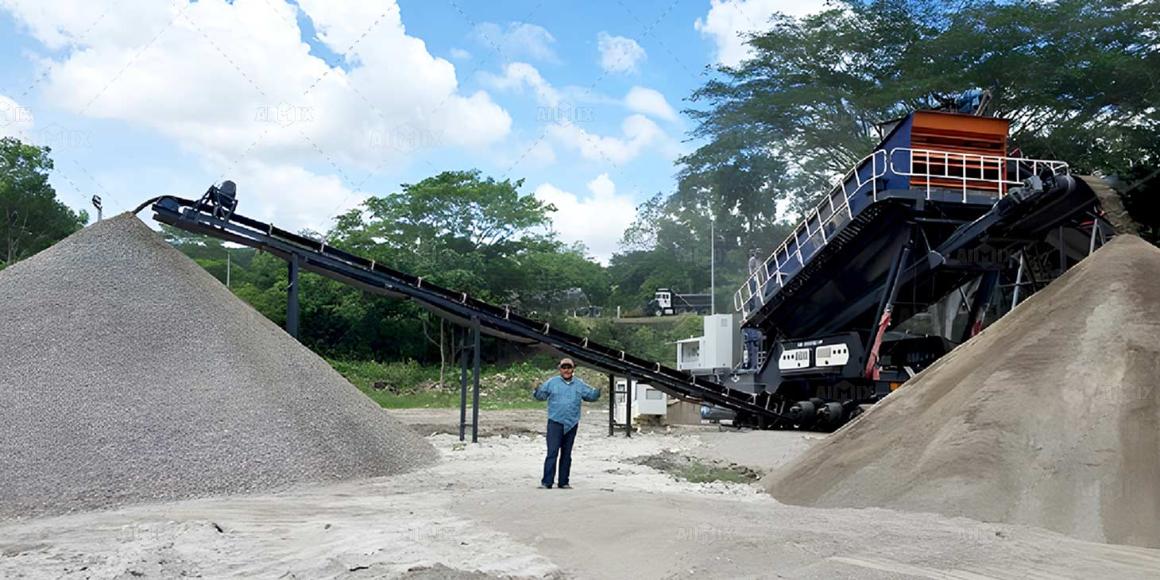
Hard Rock, Smart Tech: Why Automation is the New Standard for Granite Crushing Plants
Granite occupies a peculiar position in the crushing hierarchy. It is abundant, durable, and universally demanded—yet it is also abrasive, unforgiving, and merciless to equipment that lacks fortitude. For decades, processing this igneous behemoth required a brute-force approach: massive jaw crushers fed by patient loaders, seasoned operators adjusting closed-side settings by feel, and maintenance crews resigned to the accelerated wear that granite exacts as its toll. The industry accepted this as the cost of doing business. But the calculus has shifted. Automation has moved from the periphery of crushing operations to their very core, fundamentally altering how granite is reduced, shaped, and delivered. What was once considered a premium add-on—sensors, remote monitoring, adaptive controls—has become the baseline expectation for operators who understand that margin in hard rock processing is not earned through volume alone but through consistency, uptime, and the intelligent management of wear. The granite crusher machine plant of today is less a collection of heavy steel boxes and more a networked system of intelligent machines, each communicating with the others to optimize throughput while preserving component life. This is not a future state. It is the new standard.
The Cost of Inconsistency: Why Granite Demands Precision
Granite punishes variability. A jaw crusher fed unevenly—too much material one moment, too little the next—experiences fluctuating wear across its fixed and movable dies, leading to premature replacement and inconsistent product shape. A cone crusher operated without real-time feedback on liner wear will eventually produce flaky aggregate that fails specification for high-grade asphalt or concrete applications. In the analog era, these inefficiencies were accepted as inherent to the material. Operators developed intuition for the sound of a properly loaded chamber, the feel of hydraulic pressure, the visual cues of product gradation. But intuition cannot compensate for the speed at which modern plants operate. Automation closes this gap. Continuous level sensing in the crusher feed hopper ensures that each machine receives a consistent surge of material, eliminating the starvation-flood cycles that accelerate wear. Cavity level sensors within cone crushers provide real-time data to the plant control system, which adjusts feed rates to maintain optimal choke feeding—the condition where the crushing chamber remains full, ensuring inter-particle crushing and maximizing the generation of cubical product. For granite, where abrasion is constant, the precision enabled by automation translates directly into extended liner life and reduced downtime. A plant that operates with consistent parameters does not merely produce more tons; it produces more tons per wear dollar, a metric that ultimately determines profitability in hard rock applications.
Automated Wear Management: Predicting Failure Before It Occurs
Perhaps the most transformative application of automation in granite crushing plants in wear management. Traditional practice dictated that liners be inspected manually at scheduled intervals—a process that either replaced components prematurely, leaving useful life on the table, or too late, risking damage to the crusher bowl or mantle. Modern systems have rendered this guesswork obsolete. Crushers equipped with wear liner sensors track the remaining thickness of manganese steel in real time, transmitting data to centralized dashboards that display projected liner life in tons processed rather than calendar days. This capability allows maintenance planning to shift from reactive or arbitrary scheduling to condition-based intervention. A plant manager can see that the secondary cone crusher has fifty thousand tons of remaining capacity and coordinate liner replacement with a scheduled maintenance window, eliminating unplanned downtime. Furthermore, automation platforms increasingly incorporate vibration analysis and temperature monitoring that detect early indicators of bearing failure, lubrication issues, or misalignment. For granite operations, where a single bearing failure can halt production for days and require specialized repair, this predictive capability is not a convenience but a competitive necessity. The cost of automation is recovered not in increased tonnage but in the preservation of uptime—the single most valuable asset in any crushing operation.
Remote Operations and Centralized Control: The End of the Crusher Shack
The physical relationship between operator and machine has been fundamentally reconfigured by automation. The traditional crusher shack—a small enclosure positioned within sight of the primary crusher, subject to noise, dust, and vibration—is rapidly becoming obsolete. Modern granite plants are controlled from centralized facilities where operators monitor multiple machines across a facility or even multiple sites from ergonomic workstations equipped with multiple displays. This centralization yields safety benefits that are self-evident, removing personnel from hazardous zones. But the operational advantages are equally significant. A single operator can manage the entire crushing circuit, adjusting crusher settings, monitoring throughput, and responding to alarms without traversing the plant floor. Moreover, remote connectivity allows subject matter experts to assist from anywhere in the world, providing diagnostic support during critical failures without travel delays. For operations in remote locations or regions where skilled crusher operators are scarce, the ability to centralize expertise across multiple sites represents a paradigm shift in workforce utilization. The granite plant that once required three operators per shift can now run with one, with the remaining personnel redeployed to maintenance or quality control functions that directly impact product quality and equipment longevity.
Data-Driven Optimization: From Individual Machines to Integrated Systems
The final layer of automation sophistication lies in the integration of data across the entire processing circuit. Isolated machine controls provide local optimization; integrated systems enable holistic optimization. Modern automation platforms aggregate data from primary, secondary, and tertiary crushers, along with screens, conveyors, and surge bins, into a unified database that enables analysis impossible with standalone controls. Operators can see how changes to primary crusher settings affect recirculating loads in the tertiary circuit. Plant managers can identify that specific screen cloth configurations, combined with particular crusher speed settings, yield the optimal balance of production rate and product shape. Over time, these platforms accumulate operational history that enables continuous improvement—adjustments that are tested, measured, and refined based on empirical data rather than intuition. For granite processing, where the relationship between machine settings and product characteristics is complex, this data-driven approach yields incremental gains that compound over time. A stone crushing plant that improves its cubical product yield by five percent, reduces liner consumption by ten percent, and increases overall availability by three percent has transformed its competitive position without adding a single new machine. This is the promise of automation in hard rock crushing: not merely doing the same work with fewer people, but doing fundamentally better work with the same equipment, extracting value from granite that was previously left in the quarry or lost to inefficiency.
Demand Drivers: Mining, Agriculture, and the Need for Mobile Self Loading Concrete Mixer Solutions in Africa
The acceleration of development across the African continent is fundamentally reshaping demand for construction methodologies, particularly in the critical, capital-intensive sectors of mining and agriculture. These industries, which form the economic backbone of numerous nations, are increasingly characterized by projects situated far from established urban centers and their attendant infrastructure. Traditional concrete supply chains—reliant on fixed batching plants and fleets of transit mixers—break down under the tyranny of distance, poor road networks, and volatile logistics. This systemic failure is creating a powerful, sustained demand for mobile self loading concrete mixers. These integrated machines, which combine aggregate handling, batching, mixing, and limited transport into a single mobile platform, provide a paradigm-shifting solution. They offer operational autonomy in locations where conventional concrete delivery is either prohibitively expensive or logistically impossible, directly addressing the unique infrastructural challenges of African resource and agricultural development.
The Mining Sector: Enabling Remote and Rapid Infrastructure Development
The development of a greenfield mining operation in regions like the DRC copper belt, West African goldfields, or Mozambican coal basins presents a profound construction challenge. Before a single ton of ore is extracted, vast supporting infrastructure must be created: processing plant foundations, tailings dam walls, administrative buildings, workshops, and perimeter security. These projects are often hundreds of kilometers from the nearest reliable commercial ready-mix plant. Transporting concrete over such distances on rough, unpaved access roads is a recipe for material degradation, massive waste, and exorbitant cost. A mobile self-loading mixer deployed at the mine site provides logistical sovereignty. It can produce structural-grade concrete on-demand using locally sourced aggregates and bulk cement delivered in cost-effective tipper trucks. This eliminates the need for a dedicated, permanent batching plant during the construction phase, dramatically reducing initial capital outlay for the mining company.
Beyond initial construction, the machine’s utility extends to the mine’s operational lifespan. Mining is an exercise in continuous maintenance and expansion. Secondary crusher foundations need repair, haul road crossings require stabilization, and new leach pads or sedimentation ponds are regularly constructed. A mobile self-loader provides the flexibility to support these scattered, intermittent concrete needs without maintaining a permanent mixing operation. In remote exploration camps, the same unit can be used to pour foundations for drill pads, camps, and airstrips. Its ability to operate with limited water resources—a critical constraint in arid mining regions—by utilizing recycled process water further enhances its suitability. For the mining engineer, the machine is not just a concrete mixer; it is a force multiplier for infrastructure resilience, enabling rapid response to maintenance needs and incremental expansion without being held hostage to fragile, long-distance supply chains.
Agricultural Modernization: Building the Foundation for Food Security
Parallel demand surges from the continent’s agricultural transformation. National and pan-African initiatives aimed at boosting food security and moving up the value chain are driving unprecedented investment in rural infrastructure. This includes the construction of large-scale grain silos and storage facilities, irrigation canals and headworks, processing plants for crops, and dairy or poultry units. These projects are, by definition, located in agricultural heartlands, not industrial zones. The economic model for a 10,000-ton capacity silo in rural Zambia or an irrigation pumping station in northern Nigeria cannot support the cost of pumping concrete from a city plant 150 kilometers away. A mobile large concrete mixer brings the plant to the project. It enables contractors to bid on and execute these jobs profitably, using locally available ballast and sand, thus keeping capital within the local economy.
The demand driver extends to public works supporting agriculture: rural road networks, market structures, and small bridge constructions. Governments and development agencies are funding thousands of kilometers of farm-to-market roads, which require numerous culverts, drainages, and small bridge abutments. A mobile mixer can move with the road construction crew, producing the precise, small batches of concrete needed for these scattered structures efficiently. This capability is transformative for cooperatives and agri-businesses building their own infrastructure. It democratizes access to quality concrete, allowing a medium-scale farming operation to build its own processing shed or milk parlour with controlled costs and timelines. The technology directly supports the intensification and commercialization of African agriculture by removing a key infrastructural bottleneck: reliable, affordable access to building materials at the point of need.
The Convergence: Common Drivers and the Strategic Imperative
Despite serving different sectors, the demand drivers in mining and agriculture converge on common themes that make the mobile self-loader a strategic imperative. The primary convergence is the need for decentralized production. Africa’s development is increasingly polycentric, occurring away from traditional coastal capitals. Centralized production and long-haul distribution models fail in this context. The mobile mixer is the technological embodiment of decentralization, enabling high-quality construction at the periphery. Secondly, both sectors operate in environments of logistical fragility. Unpaved roads become impassable in rains, truck availability is unpredictable, and fuel costs are volatile. The self-loader mitigates these risks by minimizing the number of vehicle movements and dependencies required to produce concrete.
From a financial perspective, the investment case is compelling. The total cost of ownership analysis for a contractor serving these sectors shows a rapid payback period, often under 24 months. The machine displaces the immense cost of transit mixer hire, ready-mix premiums, and material waste. It provides a competitive advantage in bidding for remote projects. For equipment suppliers and distributors, this represents a sustained growth market. The demand is not cyclical but structural, driven by the fundamental, long-term trajectories of African mining and agricultural development. The mobile self-loading concrete mixer is therefore more than a piece of machinery; it is an enabling technology for continental transformation. It provides the material sovereignty required to build the mines that will fuel economies and the agricultural infrastructure that will feed populations, making it an indispensable tool in Africa’s ongoing development narrative.
Price vs. Performance: Why AIMIX Self Concrete Mixers Are Worth the Investment for Nigerian Builders
The Nigerian construction landscape presents unique challenges that demand equipment capable of navigating rugged terrain, operating in remote locations, and delivering consistent performance under demanding conditions. AIMIX self concrete mixer have emerged as a transformative solution for Nigerian builders, offering a compelling value proposition that transcends initial price considerations. These machines integrate loading, mixing, transporting, and discharging functions into a single mobile platform, eliminating the need for separate batching plants and reducing reliance on ready-mix suppliers. The investment calculus for Nigerian construction professionals must extend beyond upfront costs to encompass operational efficiency, labor optimization, and long-term reliability in an environment where equipment downtime can cripple project timelines and profitability.
Technical Superiority and Performance Capabilities
AIMIX self concrete mixers incorporate advanced engineering features that distinguish them from conventional mixing solutions. The fully-hydraulic transmission system in models like the AS-3.5H provides smoother operation, higher durability, and easier control compared to traditional mechanical-drive systems. These machines feature 4×4 hydraulic drive with speeds up to 30 km/h, enabling them to navigate challenging Nigerian terrain with ease. The mixing drum capacities range from 1,700 liters in the AS-1.2 model to 9,000 liters in the AS-6.5, with concrete output capacities spanning from 7.2 m³/h to 22 m³/h depending on the model configuration. The intelligent weighing system achieves weighing errors below 2%, ensuring precise material ratios and consistent concrete quality across every batch. This level of accuracy is particularly valuable in Nigeria's construction market, where material costs represent a significant portion of project budgets and quality consistency directly impacts structural integrity and compliance with building standards.
The equipment's versatility extends to its operational capabilities. The 270-degree drum rotation allows multi-angle and multi-directional discharging, reducing labor intensity for concrete paving and improving production efficiency. The 13.5-inch high-definition touchscreen interface provides intuitive control, with operators able to master the system within 10 minutes of training. This user-friendly design is crucial in Nigeria's construction sector, where skilled operator availability can be limited and training time represents a significant operational cost. The machines' ability to operate independently of external power sources makes them ideal for remote construction sites across Nigeria, from rural housing projects to infrastructure development in areas with unreliable electricity supply. The crawler chassis and all-terrain rubber tracks distribute ground pressure evenly, preventing sinking in swampy conditions while maintaining traction on steep inclines—features that prove invaluable during Nigeria's rainy season when many construction sites become inaccessible to conventional equipment.
Economic Justification and Return on Investment
The financial case extends well beyond the initial purchase concrete mixer price in Nigeria, which typically ranges from $10,000 to $50,000 depending on model specifications and configuration. The true value proposition emerges when considering the operational cost savings and productivity gains these machines deliver. A single self-loading mixer can replace 6-8 workers on a construction site, significantly reducing labor costs while eliminating the coordination challenges associated with manual concrete mixing and transportation. The automated weighing and batching system reduces material wastage to 3-5%, compared to 8-12% with traditional methods, representing substantial savings on cement, aggregates, and water over the equipment's service life. The elimination of ready-mix truck delivery fees further enhances the economic advantage, particularly for projects located in remote areas where transportation costs can escalate rapidly.
Nigerian builders have reported payback periods of 12-18 months for active contractors, with one customer achieving $200,000 in labor and fuel savings over nine months of operation. The equipment's mobility allows contractors to accept smaller projects that would otherwise be uneconomical, expanding their market reach and revenue potential across Nigeria's diverse construction sector. The ability to complete concrete placement in a single continuous operation minimizes cold joints, reduces formwork requirements, and improves structural integrity—factors that translate into reduced rework costs and enhanced project quality. The machines' compact dimensions (typically 5,600-8,450 mm in length, 2,280-3,050 mm in width) allow access through standard construction site gates and confined urban spaces, making them suitable for projects in densely populated Nigerian cities like Lagos and Abuja where space constraints limit traditional construction methods.
Durability and After-Sales Support in Nigerian Conditions
AIMIX self mini concrete mixers are engineered to withstand the demanding conditions of Nigerian construction environments. The structural components undergo sandblasting and phosphating treatments, providing superior rust protection that extends equipment service life in Nigeria's humid coastal regions and during the rainy season. The quadruple shaft-end sealing system prevents slurry ingress, ensuring durability for over 40,000 batches—a critical feature given the high-volume concrete production requirements of Nigeria's infrastructure development projects. The modular hydraulics allow quick diagnosis and part replacement, minimizing downtime and maintenance costs. The equipment's ability to handle maximum aggregate sizes up to 40 mm and concrete slump ranges from 140-230 mm makes it suitable for the diverse mix designs required across Nigeria's construction sector, from residential buildings to industrial facilities and infrastructure projects.
AIMIX's after-sales support infrastructure in Nigeria provides a significant competitive advantage. The company maintains local warehouses and technical support teams, enabling rapid response times for maintenance and repairs. This localized support is particularly valuable in Nigeria, where equipment downtime can result in significant project delays and financial losses. The availability of genuine spare parts through local distribution networks ensures that maintenance requirements can be addressed promptly, reducing the risk of extended equipment downtime. Nigerian customers have highlighted the comprehensive after-sales service as a key factor in their purchasing decisions, with technical support teams providing training, installation assistance, and ongoing maintenance guidance. The equipment's residual value in Nigeria's growing equipment resale market further enhances the investment proposition, providing an exit strategy for contractors who may wish to upgrade equipment or exit specific market segments. The combination of robust engineering, localized support, and strong residual value makes AIMIX self concrete mixers a strategically sound investment for Nigerian builders seeking to enhance their competitive position in the country's rapidly evolving construction industry.
Ghana Concrete Mixer Prices Explained: Can $30,000 Cover the Total Investment?
Let's be perfectly clear about one thing from the start: if you think a $30,000 price tag in Ghana means you can simply drive a new concrete mixer off the lot and immediately start a profitable business, you are setting yourself up for a profound financial disappointment. This figure is a siren song, a dangerously alluring headline that obscures a far more complex and expensive reality. The conversation around mixer prices is plagued by this reductive focus on the machine's sticker concrete mixer price in Ghana. This is not how successful, sustainable construction enterprises are built in a competitive market like Ghana. We must shift the debate from a naive question of purchase price to a sophisticated argument about total capital deployment. A $30,000 machine is merely the cornerstone of an investment pyramid, and ignoring the rest of the structure is a recipe for failure before the first yard of concrete is even mixed.
The $30,000 Question: A Mirage of a Price Tag?
First, we must dissect what a $30,000 investment actually buys you in the current Ghanaian market. In many cases, this sum positions you squarely in the realm of a new, entry-level mobile drum mixer or a very basic, small-capacity self-loading model from a lesser-known manufacturer. Is it a functional machine? Possibly. But this self loading concrete mixer price point often represents the absolute baseline of capability and durability. The components—the engine, the hydraulic system, the chassis—are typically where manufacturers make their compromises to hit that tempting, low-number price. These are not machines built for the relentless pace and challenging conditions of Ghanaian construction sites; they are built to win a price war on a spec sheet. Furthermore, this figure almost never includes the critical costs of shipping, customs clearance, duties, and port fees, which can easily add 20-30% to the landed cost before the machine even touches Ghanaian soil. To believe $30,000 is the finish line is to ignore the starting pistol.
The Inescapable Arithmetic of Ancillary Investment
This is where the fantasy of a single-price investment completely unravels. The mixer is useless without the ecosystem that supports it. Have you budgeted for the prime mover? A reliable truck to transport that mobile mixer from site to site is not an optional extra; it is the mixer's legs. That's another significant investment. Then, you need the loading equipment. A self-loader has it integrated, but a standard drum mixer requires a separate payloader or excavator to charge its hopper. What about the foundational inventory of spare parts—filters, hoses, wear items—to handle the first six months of operation? And we haven't even touched on the most valuable asset of all: the trained operator. A skilled operator maximizes output and minimizes wear; an untrained one can destroy a $30,000 investment in weeks. The costs of licensing, insurance, and initial fuel and lubricant stocks complete this picture. Suddenly, that singular $30,000 has blossomed into a required capital outlay of $50,000, $60,000, or more. This is the inescapable arithmetic that separates hobbyists from professionals.
The True Blueprint: From Acquisition to Profitability
Therefore, the argument must pivot from "Can I buy a large concrete mixer for $30,000?" to "What does a viable, profit-generating concrete production setup truly cost?" A prudent, forward-thinking investor uses the $30,000 figure not as a budget, but as a single line item in a comprehensive business plan. This plan must account for all the aforementioned ancillary costs, plus a robust operational cash reserve. This reserve is your business's immune system—it covers you when a client is late on payment, when you need to take on a smaller job to bridge a gap, or when that inevitable first major repair bill arrives. The goal is not to own a mixer; the goal is to own a profitable, reliable source of concrete. Sometimes, this smarter path means allocating that $30,000 as a down payment on a higher-quality, more durable machine with a reputable service network, financing the rest through a structured loan with predictable payments covered by your cash flow. Or, it could mean exploring the reputable second-hand market for a well-maintained machine from a top-tier brand, where your total capital goes further. The $30,000 question is the wrong question. The right question is: "What is the total investment required to build a resilient concrete business that will thrive for years in Ghana's vibrant market?" When you start with that, you're not just buying a machine; you're building a future.
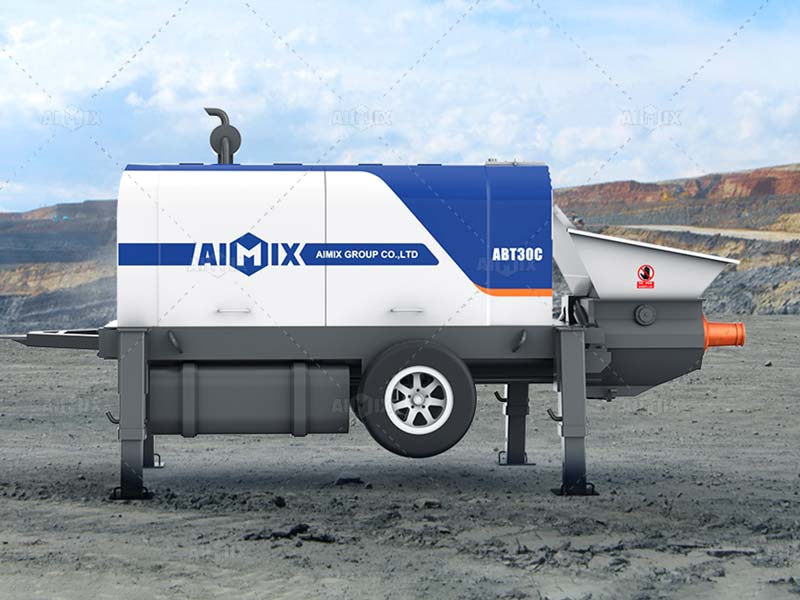
Balancing Investment and Payback: The Financials of Buying a Mini Concrete Line Pump
The decision to purchase a mini concrete line pump is not merely a transaction; it is a strategic wager on the future of a construction business. It sits at the intersection of ambition and arithmetic, a tangible piece of mini concrete pump machinery that represents both a significant capital outlay and a potential engine of liberation from the constraints of manual labor and third-party dependencies. For the savvy contractor, this isn't just about buying a tool. It's about acquiring a new operational capability, a mobile production unit that can redefine a company's efficiency, its project capacity, and ultimately, its financial trajectory. The central question, therefore, shifts from "Can I afford it?" to the more profound and critical inquiry: "How long until it pays for itself, and what becomes possible after that point?"
The Upfront Calculus: More Than a Sticker Price
The initial financial commitment is the first and most obvious hurdle, but its true scope is often obscured. The invoice from the manufacturer is just the headline figure. Beneath it lies a substratum of ancillary costs that must be factored into the total acquisition calculus. Transporting the robust machine to your location is the first additional expense. Then comes the investment in the essential pipeline and hoses—the vascular system of the operation—which can represent a surprising percentage of the initial pump cost. Furthermore, one must consider the less tangible startup investments: operator training to ensure proficiency and basic maintenance supplies to guarantee longevity. For many small to medium enterprises, the method of financing this totality is a pivotal decision. A large cash payment preserves equity but can strain operational liquidity. A loan or lease agreement, while introducing interest, transforms a capital expense into a predictable monthly outflow, a structure that can be more easily absorbed and managed against the machine's future revenue generation.
The Revenue Engine: How the Pump Earns Its Keep
Once on the ground, the mini line pump for sale transforms from a static asset into a dynamic revenue engine. Its most straightforward earning potential is through direct billing. Renting the pump and an operator to other contractors or for specific projects creates a clear, high-margin income stream. However, the more profound financial impact is often found in the intangible dividends. The pump's efficiency is its most potent economic feature. A task that might have consumed a full day for a crew with wheelbarrows can be accomplished in a matter of hours. This compression of labor hours is a direct cost saving. It also unlocks the powerful force of opportunity cost. The labor and time freed up can be redeployed to other billable tasks on the same site or to begin mobilizing for the next project, effectively allowing the business to be in two places at once. This operational agility fosters a reputation for reliability and speed, which in turn attracts more clients and allows for more competitive, yet still profitable, bidding.
The Breakpoint Horizon: Charting the Path to Profitability
The moment of truth, the break-even point, is not a mythical date but a calculable horizon. It is reached when the cumulative revenue generated by the pump—from both direct rentals and the internal savings on labor and time—surpasses the total cost of acquisition and operation. Creating a simple financial model is essential. Estimate the number of days per month the pump will be utilized, assign a market-rate rental value to those days, and add the calculated savings from increased labor efficiency on your own projects. Project this monthly financial benefit against your monthly costs (including any financing payments). The result is your estimated payback period. For a well-utilized mini pump, this horizon can often be measured in months, not years. Beyond this threshold lies pure profitability and the scalability quotient. The small concrete pump for sale is no longer a cost center but a profit center, funding its own potential successor or enabling the acquisition of complementary equipment. Even at the end of its service life, the machine offers a final paycheck through its residual value in the robust used-equipment market, closing the loop on a sound financial cycle.
Navigating the Mobile Ready Mix Plant Market in Tanzania: Price Insights and Supplier Strategies
The Tanzanian construction sector is currently navigating a period of significant transformation, fueled by national infrastructure ambitions and rapid urban expansion. This growth trajectory creates a substantial and sustained demand for ready-mix concrete, positioning the mobile ready mix concrete batching plant as a critical asset for contractors and entrepreneurs. However, the procurement process for such equipment is fraught with nuanced challenges. The market presents a complex tapestry of international suppliers and local fabricators, each with divergent pricing models, quality standards, and, most critically, after-sales service capabilities. Successfully navigating this landscape requires a methodical and deeply analytical approach, where an understanding of the local operational context is as important as the technical specifications of the machinery itself. A strategic acquisition is not merely a purchase; it is a long-term investment in a company's productive capacity and competitive edge.
The Tanzanian Terrain: A Market of Distinct Opportunities and Complexities
The demand drivers for mobile ready mix plants in Tanzania are powerful and multifaceted. Large-scale public works projects, including road networks, railway extensions, and hydropower dams, require a reliable and flexible supply of concrete, often in remote and logistically challenging locations. Concurrently, the explosive growth of cities like Dar es Salaam, Mwanza, and Arusha generates immense demand for residential and commercial buildings. This is where the intrinsic value of a mobile concrete batching plant in Tanzania becomes apparent. Unlike stationary facilities, these units can be rapidly deployed and relocated, serving multiple projects from a single investment and drastically reducing the costs and complications associated with long-distance concrete transportation. The ability to establish a temporary batching site close to a project is a formidable strategic advantage in a country where infrastructure can make traditional supply chains unreliable and prohibitively expensive.
Deconstructing the Price Architecture of a Mobile Plant
The price of a mobile ready mix plant in Tanzania is not a single figure but a composite of several interdependent factors. The most significant variable is the plant's core configuration and technological tier. A basic, semi-automatic plant with a modest production capacity will occupy the lower end of the price spectrum. In contrast, a fully automated plant with a sophisticated PLC control system, precision weighing sensors, advanced dust collection, and a higher hourly output will command a premium. Potential buyers must look beyond the initial sticker price and engage in a rigorous analysis of the Total Cost of Ownership (TCO). This includes projected expenses for maintenance, wear parts, fuel consumption, and potential downtime. A superficially cheaper plant from an unknown supplier may lack robustness or local technical support, leading to operational disruptions whose costs swiftly eclipse the initial savings. The market features a wide supplier spectrum, from globally recognized brands with established dealer networks to regional fabricators offering more budget-conscious options. Each presents a different value proposition centered on durability, technological sophistication, and, most importantly, post-purchase support.
Formulating a Strategic Procurement and Partnership Plan
The final and most critical phase involves transforming market analysis into a decisive and advantageous acquisition. This begins with exhaustive due diligence on potential suppliers. Credible manufacturers should provide verifiable references from past clients, both within Tanzania and in similar markets. An assessment of their local presence is paramount; this includes the existence of a service workshop, the availability of a comprehensive inventory of common spare parts, and the qualifications of their in-country technicians. The reliability of this support network is a primary determinant of long-term operational viability. Negotiations should, therefore, extend beyond the concrete batching plant price to encompass the entire partnership framework. Key points for discussion include financing options, the provision of comprehensive operator training, and clearly defined commissioning protocols to ensure the plant is installed and calibrated correctly from its first day of operation. A strategically procured mobile plant, backed by a reliable supplier partnership, is not just a piece of equipment; it is a foundational pillar for sustainable growth in Tanzania's demanding and promising construction market.
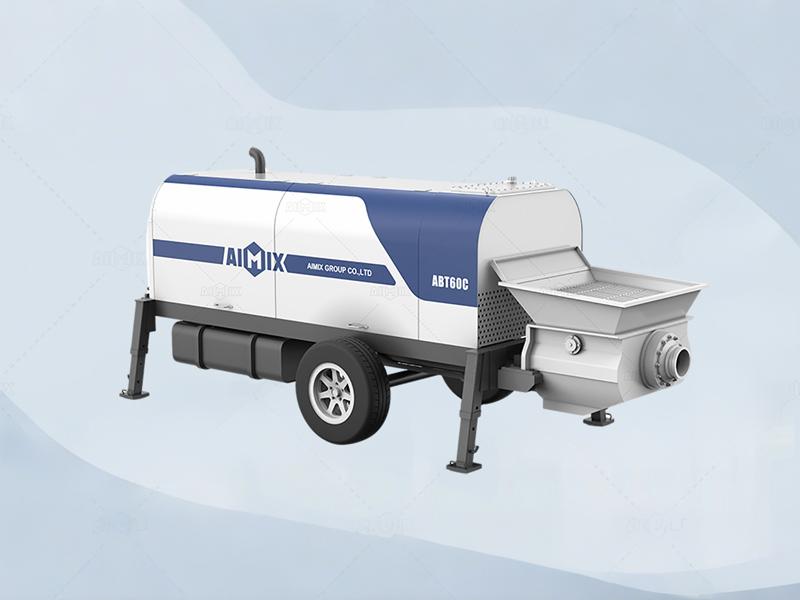
Wheeled vs. Crawler: Which Concrete Trailer Pump is Best for the UAE Environment?
The United Arab Emirates presents a construction environment unlike any other, a dynamic crucible where ambition meets extreme conditions. Here, the pace of development is relentless, and the landscapes shift from pristine, stable hardstands to vast, unprepared desert sites. In this high-stakes arena, the choice of a concrete trailer pump for sale is not a minor detail—it is a pivotal strategic decision that can dictate the success and profitability of a project. The debate between wheeled and crawler-mounted models is often oversimplified. It is not a question of which machine is universally "better," but which is the optimal tool for the specific, and often severe, demands of the UAE's unique environment. The correct choice unlocks unparalleled efficiency; the wrong one invites logistical paralysis and financial bleed.
The Wheeled Trailer Pump: Champion of Speed and Accessibility
For the vast majority of urban projects and developments on established sites, the wheeled trailer pump stands as the undisputed champion of efficiency. Its primary virtue is its profound mobility. This machine is designed for velocity, capable of being hitched and transported at road speeds between sites with breathtaking ease. On a prepared surface like a city street or a finished hardstand, setup is a matter of minutes, not hours. This operational agility is a massive force multiplier, allowing a single pump to service multiple projects in a single day. The economic argument is equally compelling. Wheeled units generally present a lower initial capital outlay and significantly reduced mobilization costs. They are the quintessential tool for fast-paced projects like villa communities, low-rise commercial blocks, and infrastructure on stable ground, where getting in, pouring, and getting out quickly is the paramount objective.
The Crawler Trailer Pump: Titan of Stability and Ruggedness
When the terrain turns treacherous, the crawler mobile concrete pump reveals its indispensable nature. This is the titan of the industry, engineered not for speed, but for absolute dominion over challenging ground. Its undercarriage, with robust tracked propulsion, provides unassailable traction on loose sand, gravel, mud, and steep inclines that would instantly immobilize a wheeled unit. This capability is not a luxury in the UAE; for remote desert pours, pipeline foundations, or any project on virgin, unprepared land, it is an absolute necessity. Beyond mere stability, crawler pumps often boast more powerful hydraulic systems, granting them greater pumping reach and the ability to handle more demanding concrete mixes. They are the definitive solution for projects where the site itself is the primary adversary.
The Verdict: Aligning Your Choice with UAE Project Realities
So, which configuration truly reigns supreme? The answer lies in a clear-eyed assessment of your project portfolio. For contractors focused on the relentless urban and industrial development within Dubai, Abu Dhabi, and Sharjah, the wheeled trailer pump is the logical and profitable workhorse. Its speed, agility, and cost-effectiveness align perfectly with the demands of a multi-site, fast-turnaround business model. The ability to swiftly navigate the urban landscape is a non-negotiable advantage. Conversely, for those tackling the nation's grand infrastructure projects, operating in remote locations, or consistently working on soft, unstable subgrades, the crawler pump is not just the best choice—it is the only viable one. Its superior stability and ground pressure distribution prevent costly sinking and ensure a safe, uninterrupted pour where other machines would falter. The decision ultimately boils down to terrain. The wheeled mini concrete pump for sale masters the paved and the prepared, while the crawler pump conquers the raw and the rugged. In the demanding environment of the UAE, making the strategically correct choice is the first step toward ensuring your project's foundation is poured on schedule, on budget, and on solid ground.
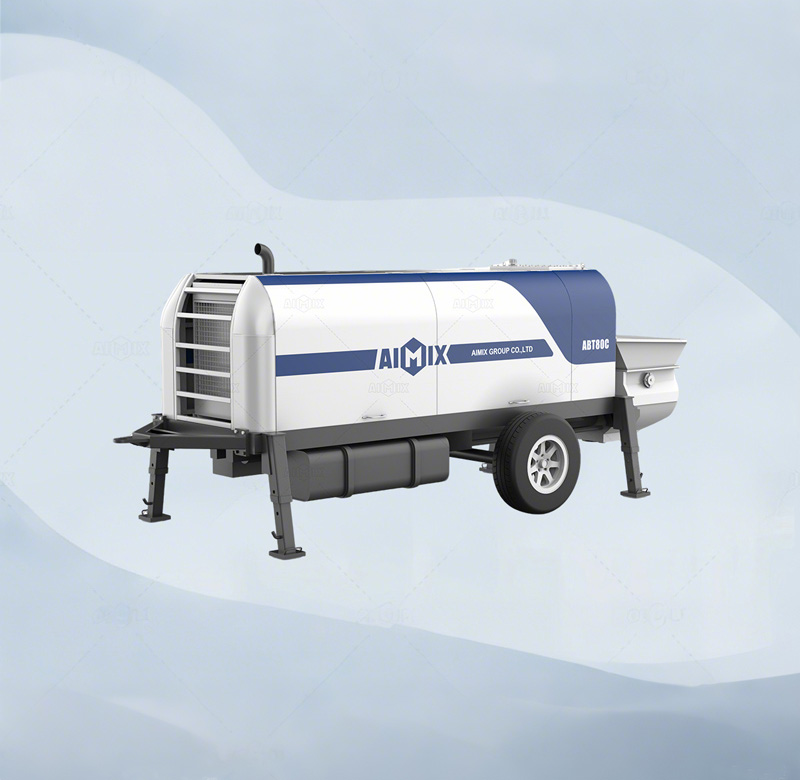
Matching Chassis Types with Working Conditions: A Guide for Mobile Concrete Trailer Pump Users
In the dynamic world of modern construction, the mobile concrete trailer pump for sale is no longer just a piece of equipment; it's a pivotal node in the project workflow. Yet, an often-overlooked determinant of its success lies not in the pump's output or pressure, but in what sits underneath it: the chassis. Selecting the correct chassis type is a strategic decision that directly impacts a project's efficiency, safety, and ultimate viability. It’s the critical interface between the machine's potential and the site's reality. A mismatch can lead to logistical nightmares, while a perfect alignment creates a seamless, powerful operation. This isn't about mere transportation; it's about matching engineering to environment to unlock peak performance.
The Urban Navigator: Mastering the Confined Job Site
For projects nestled within city centers or dense residential areas, space is the ultimate luxury. Here, a massive, multi-axle behemoth becomes a liability. The defining characteristic for an urban warrior is unparalleled maneuverability. A single-axle chassis with a compact footprint is the undisputed champion in this arena. Its tight turning radius allows it to weave through narrow access roads and position itself with surgical precision. The agility afforded by this design is a non-negotiable asset. It enables rapid deployment in cramped quarters, from basement slabs to infill developments where every square meter is accounted for. This configuration prioritizes on-the-ground flexibility over raw transport weight capacity, ensuring the concrete mobile pump can get to the pour point without becoming the primary obstruction on site.
The Off-Road Performer: Conquering Unprepared Terrain
When the project brief moves beyond paved roads to greenfield sites, rural locations, or rough, unfinished landscapes, the demands on the chassis shift dramatically. Maneuverability is joined by the paramount need for durability and stability. This is the domain of the robust, multi-axle or tandem-axle chassis. These designs provide a wider, more distributed load footprint, essential for preventing the pump from sinking into soft, unstable, or muddy ground. The additional axles and often heavier-duty suspension systems are engineered to absorb the shocks and vibrations of traversing unprepared terrain without transferring destructive forces to the pump's sensitive hydraulic and mechanical systems. This build ensures <strong>unshakable stability</strong> during operation, which is critical for maintaining pipeline integrity and ensuring a consistent, safe concrete pour, even on the most challenging ground conditions.
The Highway Cruiser: Prioritizing Logistics and Long-Distance Mobility
Some operations require a line concrete pump for sale to be a logistical nomad, traveling significant distances between disparate projects across a region. For these applications, the chassis must be a master of the road. The primary focus shifts to transport efficiency, regulatory compliance, and ease of towing. A well-balanced chassis designed for optimal roadability is key. This often involves a lightweight yet strong construction to maximize the payload capacity for pipeline and accessories without exceeding highway weight limits. A design that facilitates easy hitching and unhitching from a prime mover, combined with excellent lighting and braking systems, turns transit from a chore into a non-event. This configuration is for the contractor whose business model relies on rapid site egress and the ability to service a wide geographic area without being hamstrung by cumbersome transport requirements. It’s about minimizing downtime not just on site, but between sites.
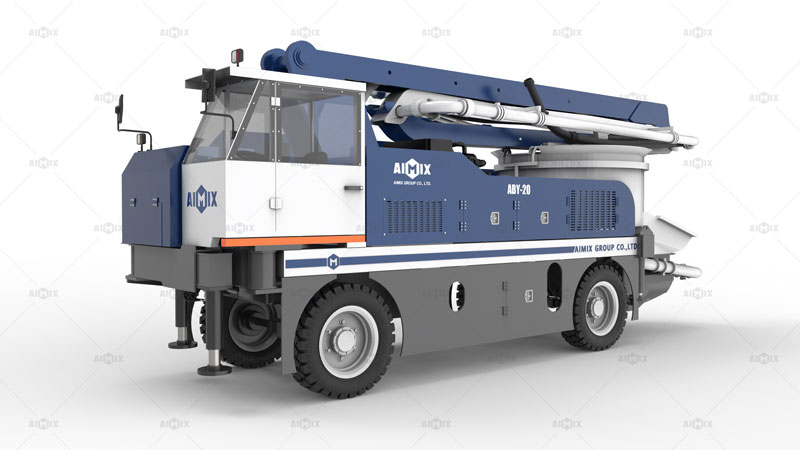
Maximizing Efficiency: The Advantages of a 20% Larger Hopper in Boom Concrete Planetary Mixer Pumps
In the high-stakes environment of modern construction, efficiency isn't just a goal; it's the fundamental currency of success. Every minute saved on a pour translates directly into cost savings, improved scheduling, and a stronger project bottom line. When we look at boom concrete planetary concrete mixer pump, we often focus on the reach of the boom or the power of the pump. But there's a critical, and often overlooked, component that holds the key to unlocking a new tier of productivity: the hopper. Specifically, the advantages conferred by a hopper that is just 20% larger than the standard model are profound. This isn't a trivial upgrade. It represents a strategic recalibration of the entire concrete placement process, addressing one of the most persistent sources of delay and operational friction.
Rethinking the Rhythm of Work: From Intermittent Stops to Continuous Flow
The standard workflow for a concrete pour is often a cycle of mix, pump, stop, and wait for the next truck. This intermittent rhythm creates a fundamental inefficiency. The concrete pumping machine operator is constantly managing the supply, and the crew's workflow is punctuated by pauses. A 20% larger hopper disrupts this cycle. It acts as a significant buffer, a reservoir that smooths out the gaps between truck deliveries. This allows the pumping operation to maintain its momentum for longer stretches. The result is a shift from a staccato, stop-start operation to a more fluid, continuous flow. This sustained momentum is where true efficiency is born, keeping the entire site productive and focused.
The Tangible Gains: Quantifying the On-Site Advantages
The benefits of this continuous flow are immediately quantifiable. First and foremost, you save a considerable amount of time over the course of a large pour. Fewer stoppages mean the project finishes faster, allowing crews to move on to the next task. Labor is utilized more effectively, as workers aren't standing idle waiting for the next batch. Furthermore, this consistency is a boon for the concrete itself. A continuous pour minimizes the risk of cold joints and ensures better structural homogeneity in the finished element. From a mechanical standpoint, the pump itself benefits. The relentless cycle of ramping up to pressure and then shutting down is hard on the hydraulic system. A larger hopper promotes longer, more stable run times, which can contribute to reduced long-term maintenance needs.
Beyond Capacity: The Ripple Effects on Mixing and Placement
The advantages extend beyond mere volume. Inside the planetary mixer, a larger charge of material can lead to a more consistent and homogeneous mix. The ingredients have more time and space to blend thoroughly, promoting optimal hydration. When this well-mixed batch is fed into the pump, the larger hopper provides a more stable head of material. This stabilizes the pressure at the pump's inlet, which is critical for smooth, efficient pumping, especially over long vertical or horizontal distances. You get fewer pressure fluctuations and a more consistent placement rate. Logistically, it also lessens the pressure on the supply chain. With a larger buffer, the timing for concrete truck arrivals can be slightly more flexible, reducing the frantic coordination that can sometimes occur when a boom concrete pump and mixer is running on empty.
A Strategic Investment, Not Just a Specification
Choosing a mixer pump with a 20% larger hopper is a strategic decision. There is, of course, a marginal increase in the initial equipment cost. However, when weighed against the cumulative savings in labor, time, and potential downtime, the return on investment becomes clear. This feature provides a tangible edge in competitive bidding, as it allows for the possibility of more aggressive, yet still achievable, project timelines. It effectively future-proofs your equipment, making it capable of handling a broader spectrum of project sizes and demands with greater proficiency. In the final analysis, this isn't just about holding more concrete; it's about embracing a smarter, more fluid, and ultimately more profitable way of working.
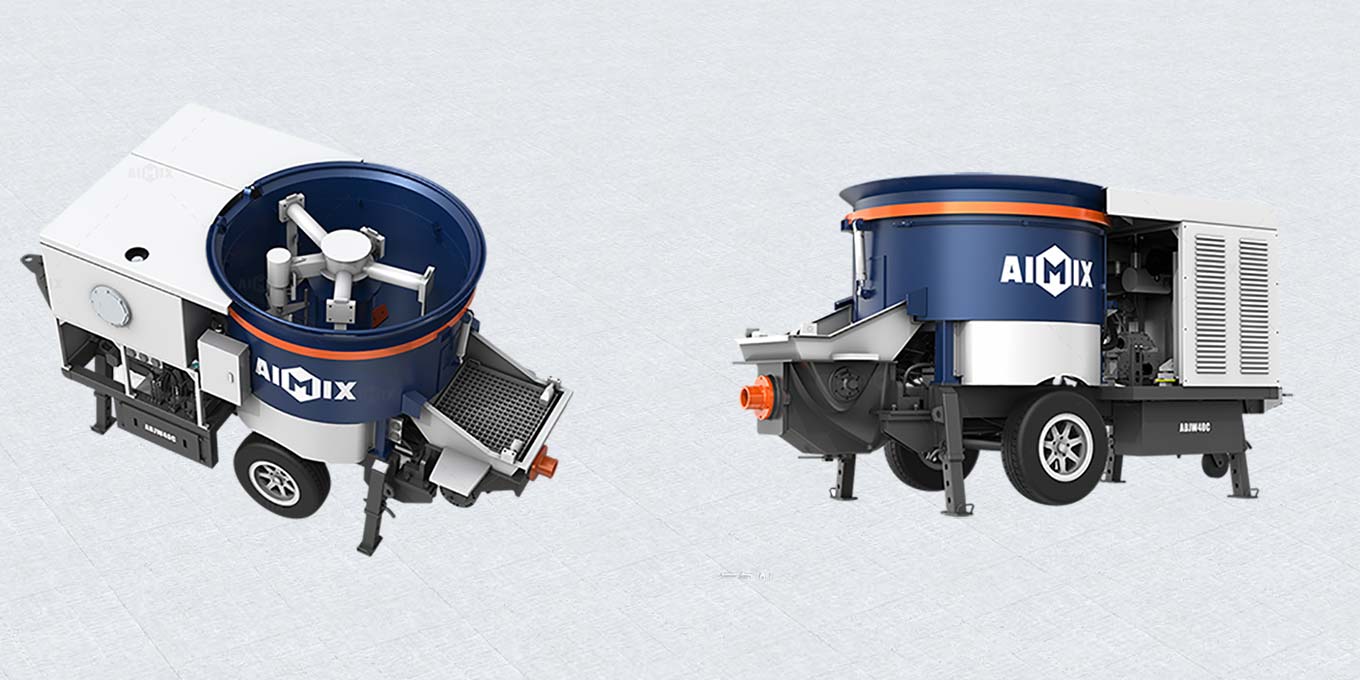
How Mini Concrete Pumps for Sale Cater to the Needs of Budget-Conscious Contractors
Budget-conscious contractors know that every dollar counts. Investing in heavy, oversized machinery might sound impressive, but does it make financial sense? Enter mini concrete pumps for sale—small in size but mighty in performance. These compact machines redefine efficiency, allowing contractors to maximize output while keeping operational costs at a minimum.
Maximizing Efficiency Without Draining the Wallet
Construction projects are expensive enough without adding unnecessary financial burdens. Mini concrete pumps offer a cost-effective solution that aligns with tight budgets without sacrificing quality. Their lower upfront price compared to larger alternatives makes them an attractive investment, particularly for small and medium-sized contractors who can’t afford to burn cash on excessive equipment.
Beyond the initial purchase price, fuel efficiency plays a major role in cost savings. Mini pumps consume significantly less fuel than their bulkier counterparts, helping contractors stretch their budgets further. Additionally, these machines come with reduced maintenance requirements, cutting down on expensive repairs and downtime. Less time in the shop means more time on-site, ensuring that every project stays on schedule without bleeding money.
Compact, Yet Powerful: Performance That Defies Size
Just because a machine is small doesn’t mean it lacks power. Small concrete pumps for sale are designed to navigate tight, restricted construction sites where larger equipment would struggle to fit. Urban projects, residential developments, and renovations often require maneuverability, and these pumps deliver exactly that.
Despite their compact design, mini pumps provide a steady and reliable flow of concrete, ensuring structural integrity with minimal wastage. Their precision pumping technology reduces spillage and material loss, making them an ideal choice for contractors who value efficiency over unnecessary extravagance. When every inch of space matters, a machine that delivers powerful performance in a small package is a game-changer.
Why Bigger Isn’t Always Better in Construction
Many contractors fall into the trap of believing that larger equipment equals greater productivity. The truth? Oversized machines often come with unnecessary expenses and logistical nightmares. Transporting them requires specialized trucks, their maintenance is costly, and they demand more fuel than their smaller counterparts.
For small to mid-sized projects, a mini concrete pump is the smarter alternative. It provides the same high-quality concrete placement as larger models but at a fraction of the cost and hassle. Contractors who choose a mini concrete mixer pump aren’t settling for less—they’re making an informed decision that prioritizes practicality and cost-effectiveness.
Final Thoughts
Mini concrete pumps prove that bigger isn’t always better—especially when it comes to budget-conscious construction. These machines deliver the power, efficiency, and precision needed for high-quality projects without the financial strain. Smart contractors recognize the value of investing in equipment that aligns with their project scale, ensuring maximum productivity at minimum expense. When it comes to concrete pumping, small concrete pump machines pack a big punch—and that’s a win for any contractor who wants to build smarter, not just bigger.
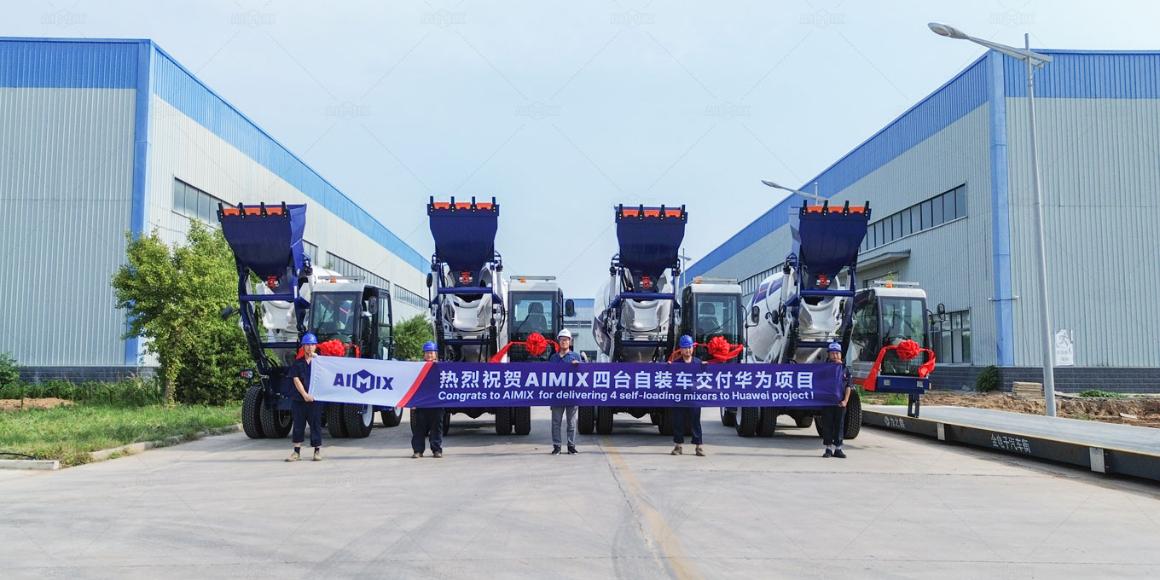
Why Self-Loading Mixers are Essential for Growing Your Contracting Business in Tanzania
The Tanzanian contracting landscape is a vibrant tapestry of opportunity, marked by ambitious infrastructure projects and burgeoning urban development. Yet, for a growing business, this potential is often tempered by a unique set of logistical and operational challenges. Remote sites with difficult access, unpredictable material supply chains, and the relentless pressure to maintain profitability on smaller projects can stifle even the most determined enterprise. In this demanding environment, conventional approaches to concrete work can become a significant bottleneck. The reliance on stationary batching plants and transit mixers introduces vulnerabilities—delays, material waste, and exorbitant costs—that erode your bottom line. The self loading mixer concrete emerges not merely as a piece of machinery, but as a transformative operational philosophy. This single, versatile unit represents a paradigm shift, offering a pragmatic and powerful solution to the very constraints that hold many contracting businesses back.
Overcoming Tanzania's Unique Operational Hurdles
The true genius of the self-loading mixer lies in its profound understanding of the on-the-ground realities faced by contractors across Tanzania. Its design directly confronts and elegantly solves some of the most persistent problems. Logistical nightmares, such as reaching a project site down a narrow, unpaved road or on a constrained urban plot, are rendered inconsequential. This machine brings the entire concrete production process directly to the point of application. There is no longer a need to coordinate with multiple transit mixer trucks, each one a variable in a complex and often unreliable equation. This grants your business a level of operational independence that was previously unattainable. You become the master of your own schedule and supply, immune to the delays of third-party suppliers. This autonomy is particularly potent for the small to medium-scale projects that form the backbone of the construction sector. It allows you to undertake jobs that were once logistically untenable or financially marginal, thereby expanding your market reach and project portfolio with remarkable agility.
The Direct Impact on Profitability and Competitive Edge
From a financial perspective, the self-loading concrete mixer in Tanzania is a catalyst for enhanced profitability. The most immediate benefit is the drastic reduction in material and transportation costs. By purchasing raw aggregates, sand, and cement in bulk, you bypass the premium costs associated with pre-mixed concrete delivered by a third party. The elimination of transit mixer hire fees alone represents a substantial and recurring saving. Furthermore, these machines are engineered for exceptional labor efficiency. A single operator can manage the entire process of loading, mixing, transporting, and placing concrete, which reallocates your workforce to other critical tasks on site. This versatility transforms your operational capabilities. One day, the machine can be producing foundation concrete for a new school block; the next, it can be mixing mortar for brickwork or a lean mix for a sub-base. This multifaceted utility builds a formidable reputation for your company. Clients quickly recognize a contractor who can deliver high-quality work on time, every time, without being hamstrung by external supply issues. That reputation for reliability and punctuality becomes your most valuable marketing asset.
Strategic Business Growth and Scalability
Ultimately, the adoption of a self-loading big concrete mixer is a strategic decision that positions your business for sustainable, scalable growth. It fundamentally alters your approach to acquiring new work. With the assurance of in-house, on-demand concrete production, you can confidently bid on a wider array of projects, including those in remote or logistically complex locations that your competitors might avoid. This capability allows you to carve out a unique and profitable niche in the market. The investment itself is a low-risk pathway to expansion. Instead of the massive capital outlay required for a stationary batching plant and a fleet of trucks, a single self-loading mixer provides a significant portion of the same capability at a fraction of the cost and complexity. It is a scalable asset; as your business grows, additional units can be added to handle larger projects or multiple sites simultaneously. This approach future-proofs your operations, providing the agility to adapt to market demands and seize new opportunities as they arise, ensuring your business is not just growing, but thriving.
10 Minutes to Mastery: Simplifying Weighing Operations with AI-Powered Self Loading Mixers
Imagine a construction site where the most critical and repetitive task—accurately weighing and batching concrete ingredients—is handled not with manual calculations and constant vigilance, but with the silent, unwavering precision of artificial intelligence. The self loading cement mixer, a marvel of mobile concrete production, has undergone a profound evolution, transforming from a powerful tool into a cognitive partner. This is not a distant vision of the future; it is the operational reality delivered by AI-powered weighing systems. These intelligent machines are engineered to demystify and streamline the entire batching process, compressing what was once a complex, error-prone procedure into a seamless, automated workflow. The promise is audacious yet simple: to grant operators true mastery over material proportioning in a matter of minutes, not through arduous training, but through intuitive technology that assumes the burden of precision.
The Burden of Traditional Batching: Inefficiency and Human Error
For decades, the creation of quality concrete has hinged on the meticulous weighing of aggregates, cement, and water. This process, often conducted with loaders and manual scale interpretation, is inherently susceptible to a spectrum of inefficiencies. The constant stopping and starting to verify weight, the physical manipulation of heavy machinery to add or remove minuscule amounts of material, and the frantic consultations of mix design sheets create a significant operational lag. Each batch becomes a time-consuming ritual, a bottleneck that limits the overall productivity of the concrete mixer machine and the crew relying on it. Furthermore, this manual methodology is a fertile ground for human error. A misread scale, a miscalculated moisture content, or a simple lapse in concentration can lead to a deviation from the specified recipe. These deviations are not trivial; they directly compromise the structural integrity, strength, and durability of the final concrete, potentially leading to costly reworks, material waste, and project delays. The traditional approach places an immense cognitive and operational load on the operator, demanding their constant focus on a single, tedious task.
The AI Revolution: An Intuitive and Automated Weighing Ecosystem
The integration of artificial intelligence shatters this old paradigm, replacing uncertainty with automated certainty. At the core of this system are sophisticated sensors and algorithms that act as the machine's perceptual cortex. As the loader arm gathers materials from a stockpile, the AI continuously monitors the weight being added to the drum in real-time. It does not merely measure; it comprehends the mix design as an immutable instruction set. The weighing system of this mini concrete mixer autonomously navigates the batching sequence, ceasing aggregate collection the moment the target weight is achieved, then moving seamlessly to cement, and finally introducing the precisely calculated amount of water. This is not a passive tool but an active participant in the process. The AI possesses the capability for self-correction, learning from the dynamics of each loading cycle to enhance the speed and accuracy of the next. It compensates for variables that would challenge a human operator, ensuring that the final combination of materials adheres to the recipe with laboratory-grade exactitude. This transforms the operator's role from a manual executor to a supervisory conductor, overseeing a perfectly orchestrated symphony of material handling.
The Tangible Benefits: A New Paradigm of Productivity and Quality
The practical implications of this technological leap are transformative, delivering benefits that resonate across the entire construction project. The most immediate advantage is the unequivocal consistency of every batch produced. Pour after pour, the mix possesses identical proportions, water-cement ratio, and workability. This repeatability is the bedrock of high-quality concrete, ensuring uniform strength development and a superior final finish, which minimizes the need for corrective surface treatments. From a financial and environmental standpoint, the reduction in material waste is profound. By eliminating both over-pouring and the creation of out-of-spec batches destined for rejection, the AI-powered mixer ensures that nearly every kilogram of purchased material is converted into usable, high-grade concrete. This precision directly translates into substantial cost savings and a significantly reduced environmental footprint. Ultimately, this technology is about empowerment. It allows a single operator to achieve a level of output and quality that previously required a small team. By shouldering the cognitive load of precision weighing, the system liberates the operator to focus on higher-level tasks like site navigation, coordination, and planning, fostering a new era of efficiency where mastery is not a hard-won skill, but an accessible standard.
What Makes a Good Concrete Batching Plant Manufacturer in Australia? Key Factors to Consider
Selecting the right concrete batching plant manufacturer in Australia requires careful consideration of multiple factors that extend far beyond basic equipment specifications. The Australian construction landscape presents unique challenges, from remote project locations to stringent environmental regulations and extreme climate conditions. A concrete batching plant manufacturer's ability to understand and address these distinctive requirements often separates adequate suppliers from exceptional partners who can truly support your operational success.
The relationship with your batching plant manufacturer typically extends for the entire lifecycle of the equipment, making the selection process particularly consequential. Beyond the initial purchase, you'll rely on their expertise for maintenance support, spare parts availability, and potentially future upgrades or expansions. This long-term partnership dynamic means that evaluating manufacturers requires looking at both tangible product features and less quantifiable aspects like company culture and commitment to customer support.
Technical Capability and Australian Compliance
Australian operating conditions demand specialized engineering considerations that many international manufacturers may not fully appreciate. Superior manufacturers demonstrate deep understanding of AS/NZS standards across electrical systems, structural design, and safety protocols. Their equipment should be purpose-engineered for Australian conditions, featuring enhanced corrosion protection for coastal applications, heat management systems for northern regions, and dust control systems that exceed state environmental requirements.
Look for manufacturers who actively participate in Australian industry associations and maintain up-to-date knowledge of evolving regulations. Their technical documentation should clearly demonstrate compliance with relevant standards, and they should provide detailed evidence of testing and certification. The best portable concrete batch plant manufacturers often go beyond minimum requirements, incorporating advanced automation that helps operators maintain compliance through built-in monitoring and reporting systems.
Local Support and Service Infrastructure
The vast geographical spread of Australian projects makes local support capabilities absolutely critical. A manufacturer may produce exceptional equipment, but without robust local presence, even minor issues can cause major project disruptions. Evaluate potential suppliers based on their service network coverage, spare parts inventory within Australia, and the responsiveness of their technical support team.
Consider the manufacturer's track record for training local technicians and providing comprehensive documentation. Australian operators need access to training that accounts for local conditions and regulations. The best manufacturers establish proper training facilities within Australia and develop strong relationships with local service providers to ensure prompt support regardless of your project's location.
Operational Experience and Industry Understanding
Manufacturers with extensive Australian project experience bring invaluable practical knowledge that informs their equipment design and support services. They understand the realities of Australian construction schedules, material variations, and workforce constraints. This operational wisdom translates to equipment that not only meets specifications but actually works effectively in real-world conditions.
Look for manufacturers who demonstrate curiosity about your specific operations and challenges. The best partners function as collaborative problem-solvers rather than simply equipment vendors. They should offer insights based on experience with similar applications and show willingness to customize solutions rather than offering one-size-fits-all approaches. Their project references should include operations similar to yours, with verifiable performance metrics and customer testimonials.
The selection process for a concrete batching plant manufacturer requires balancing multiple considerations, but the effort invested in thorough evaluation pays dividends throughout the equipment's operational life. The ideal manufacturer combines technical excellence with deep local knowledge and genuine partnership approach. By carefully assessing these key factors, Australian concrete producers can establish relationships that not only provide quality equipment but also contribute significantly to their long-term operational success and competitiveness in the market.
Southeast Asia’s Rising Demand: How It’s Shaping Concrete Plant Prices
From the buzzing streets of Jakarta to the industrial zones of Ho Chi Minh City, Southeast Asia is booming with infrastructure projects. With this wave of construction comes a growing appetite for concrete — and the machinery that produces it. Concrete plants, once niche investments, are now hot commodities as governments and developers race to meet urban growth, road expansion, and housing needs. But with rising demand comes inevitable changes in market dynamics — most notably, pricing.
Understanding how this regional momentum is influencing the concrete batching plant price requires a closer look at what’s driving the surge, how manufacturers are responding, and what it means for contractors navigating this evolving market. Let’s unpack it.
Drivers Behind the Demand Surge
Urbanization and Government Infrastructure Projects
Cities like Manila, Bangkok, and Kuala Lumpur are growing at lightning speed. Population density is climbing, and with it, the demand for roads, bridges, railways, and mass housing. Governments are not just building — they're supercharging infrastructure with multi-billion-dollar budgets. The Philippines' “Build Better More” and Indonesia’s capital relocation plans are just two examples.
This urban fever means a relentless need for concrete plants. Fixed and mobile types are being snapped up to supply ongoing mega-projects. Higher demand equals greater competition among buyers, nudging equipment prices upward — especially for high-output and automated models.
Surge in Private Sector Construction
It’s not all public-sector buzz. Private developers are expanding too. High-rise condominiums, retail complexes, logistics hubs — all are multiplying across the region. Unlike government projects, private construction often seeks compact, mobile batching plants for fast-paced, rotating job sites.
This has created a niche demand that pushes up prices for portable concrete plants. Suppliers that once catered to small orders now deal with bulk buyers, adding pressure to manufacturing lead times and component sourcing.
Impact on Concrete Plant Pricing
Equipment Technology and Automation
In response to demand, manufacturers are adding bells and whistles — digital control systems, AI-driven batching accuracy, energy-efficient motors, and smart moisture sensors. While these innovations boost productivity and reduce operational costs, they also elevate the price tags of newer models.
Contractors with long-term visions often favor the investment, but for smaller builders or resellers, these features can make newer plants feel financially out of reach. As such, the market is fragmenting between premium tech-rich plants and simpler, budget-focused models.
Material and Logistics Costs
Let’s not forget the external pressures. Rising steel prices, microchip shortages, and global freight disruptions all affect equipment pricing. Southeast Asia, being both an importer and manufacturer hub, faces fluctuating supply chain costs.
For instance, the cost of importing German or Italian control systems, crucial for automated concrete batching, has gone up significantly. Likewise, shipping costs from China to Vietnam or the Philippines have spiked in certain months due to port congestion or fuel price volatility.
What It Means for Buyers
Adaptable Procurement Strategies
With prices rising, buyers are getting creative. Some opt for refurbished plants. Others lease equipment instead of purchasing outright. Modular ready mix concrete plants — which can be assembled on-site from shipped parts — are also gaining traction, especially in island nations like the Philippines and Indonesia.
Bulk buying, regional partnerships, and even localizing component sourcing are now part of the contractor's toolkit. It’s all about finding a cost-effective path without sacrificing reliability or compliance.
Future Outlook
The demand curve in Southeast Asia shows no signs of flattening. If anything, as ASEAN integration deepens and more cross-border projects roll out, the hunger for concrete infrastructure will intensify. Prices may fluctuate with global economic winds, but the regional need is here to stay.
Contractors and suppliers who stay agile, embrace efficient tech, and maintain strong supplier relationships will ride this wave with more control and fewer budget shocks.
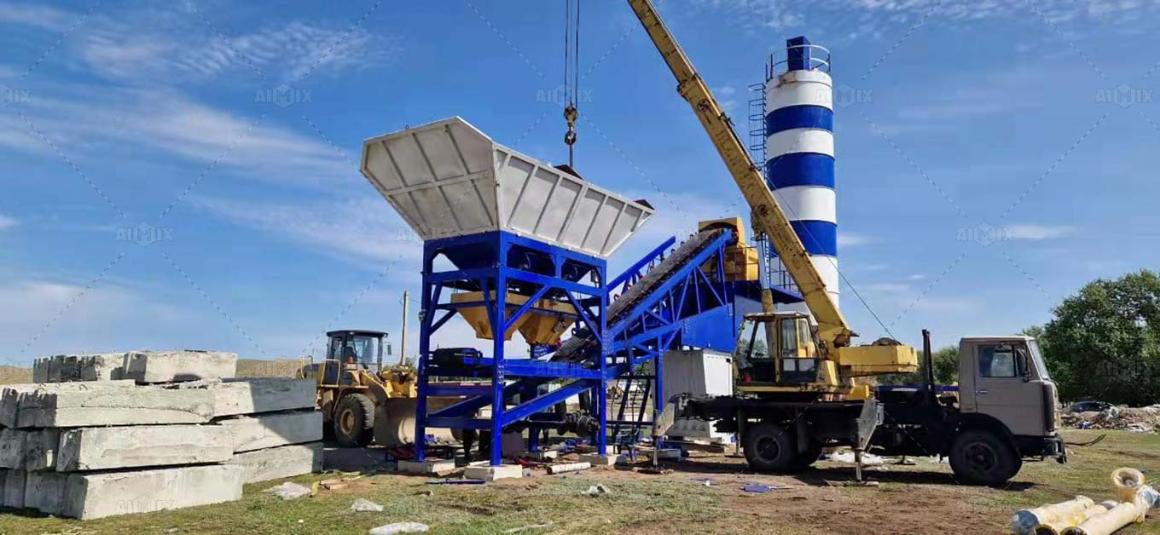
Is a Portable Concrete Plant a Good Investment? ROI Breakdown for Buyers
In the fast-paced world of construction, time is money and delays can dismantle profit margins. Contractors are under constant pressure to improve turnaround times, reduce costs, and meet increasingly specific project requirements. Against this backdrop, the portable concrete batch plant for sale has emerged as a compelling option. But is it really a wise investment, or just another shiny piece of equipment with high maintenance bills? To make an informed decision, one must look beyond the sales pitch and dissect the return on investment with clarity and care.
This article delivers a grounded and pragmatic analysis for contractors, builders, and developers weighing the merits of a portable plant. It’s not just about how much concrete you can produce—it’s about how that production impacts your bottom line. Here’s a breakdown of what you need to consider before putting your capital into motion.
Initial Investment vs. Long-Term Value
Understanding the True Cost of Ownership
At first glance, the price tag of a portable concrete plant can appear steep. Depending on configuration, output capacity, and automation features, the upfront cost ranges widely—from $50,000 for entry-level units to $200,000 or more for higher-end systems. However, this initial outlay is only part of the story.
What matters more is the long-term cost structure. Compared to traditional fixed plants, a portable unit eliminates many of the infrastructural expenditures: no need for permanent foundations, auxiliary buildings, or large-scale site preparations. That instantly reduces capital strain. Additionally, the mobility factor allows the unit to be deployed wherever the project is, cutting out delivery fees and saving time on logistics.
Maintenance and Operational Simplicity
Portable plants are designed for streamlined maintenance. Most mobile batching plant units use modular components and self-cleaning systems, reducing wear-and-tear cycles and minimizing technician labor. For small to medium contractors, this means lower operational headaches and fewer delays. With basic training, onsite teams can manage operations with limited dependency on specialized operators.
Revenue Acceleration Through Flexibility
New Project Opportunities and Market Reach
The versatility of a portable plant opens new revenue channels. With the ability to quickly relocate and set up production on virtually any terrain, contractors can take on projects in remote or underserved regions. This includes infrastructure works, mining camps, road rehabilitation, and even emergency response builds.
Contractors are no longer bound by proximity to centralized batching facilities. By bringing production to the site, they eliminate delays caused by traffic, inconsistent delivery schedules, and dependency on third-party suppliers. This hyper-local production model boosts jobsite efficiency and wins clients who demand faster results.
Custom Mixes, On-Demand
Another critical advantage is control over mix design. A portable plant allows on-the-spot adjustments, adapting recipes for temperature, humidity, or application-specific demands. For contractors specializing in specialized concrete—like pervious mixes or high-strength formulations—this control is priceless.
With this level of customization, projects meet spec faster and with fewer reworks. That translates to stronger client trust, repeat business, and improved margins.
Return on Investment: Numbers That Matter
Breakeven Timeline and Productivity Metrics
Based on field data, most portable plant owners report ROI realization within 12 to 24 months. Consider a concrete batch plant for sale producing 30 m³/h operating 5 hours daily at $70/m³. That’s $10,500 in daily output, or over $200,000 monthly, depending on project continuity. With minimal running costs compared to outsourcing ready-mix deliveries, profit retention grows rapidly.
Even when accounting for fuel, labor, and maintenance, the net income per month remains substantial. For companies working in high-demand environments or with multiple ongoing projects, the payback can be even faster. It’s a capital asset that begins to pay dividends almost immediately.
Scalability and Asset Value Retention
Unlike site-fixed infrastructure, a well-maintained portable plant holds considerable resale value. Units can be resold or repurposed as business needs evolve, creating flexibility in capital planning. Moreover, for growing contractors, adding a second or third unit becomes feasible without logistical or structural overhauls.
This scalability makes the portable plant a wise step toward growth. As your portfolio diversifies, having your own on-site production capacity allows you to negotiate from a position of strength—and deliver results with absolute consistency.
Perfect for Residential Work: Small Concrete Pump and Mixer for Home Foundations & Driveways
When it comes to residential construction projects, choosing the right equipment is key. Home foundations and driveways are integral parts of any house, and the quality of the concrete used in these projects matters a great deal. A small concrete pump and mixer might just be the ideal solution for these types of projects, offering both efficiency and cost-effectiveness. While large, heavy-duty machines are often seen as the go-to for industrial-scale projects, small concrete pump and mixer machines are perfect for residential work. Let's explore why they’re a game-changer for home construction.
Why Small Concrete Pumps and Mixers Are Essential for Residential Projects
Residential construction is a different beast compared to large-scale commercial or industrial builds. The scope of the work is typically smaller, but the challenges can still be just as significant. In these cases, a small concrete pump and mixer can offer unmatched benefits. These machines are designed to meet the needs of homeowners and contractors who require precise, reliable, and quick delivery of concrete, without the high operational costs of larger machines.
Space and Mobility: Perfect for Tight Residential Sites
One of the most compelling reasons to choose a small concrete pump and mixer for residential work is the issue of space. Many homes, especially those in older neighborhoods, are built on smaller lots with limited access. A large concrete pump might not fit or be able to maneuver easily, causing logistical headaches and project delays. A small concrete pump, however, is built to fit into tight spaces. Its compact design allows it to navigate narrow roads and even smaller backyards, ensuring that concrete can be delivered right where it’s needed. Mobility is a key factor in any residential project, and a small machine is ideal for homes with limited access.
Cost-Effectiveness for Home Foundations and Driveways
Cost is always a consideration in residential projects. Unlike large-scale commercial construction, homeowners often have tighter budgets. A small concrete pump and mixer can reduce overall costs in two major ways: by cutting down on labor expenses and reducing transport fees. With a portable concrete mixer, you don’t need to wait for large concrete trucks to make multiple trips, which can quickly drive up costs. Instead, you can mix and pour concrete on-site, eliminating the need for multiple trips and ensuring that you're not paying for unnecessary deliveries. It’s a more economical way of completing the job, making it ideal for home foundations and driveways.
The Key Advantages of Using Small Concrete Pumps for Home Construction
While it’s easy to assume that larger concrete pumps are needed for major construction projects, small concrete pumps actually have a number of advantages for home construction that make them a smarter choice. Their practicality for residential work cannot be overstated, and the benefits go far beyond simple convenience.
Streamlined Process and Quick Turnaround
Small concrete pumps offer a streamlined process for pouring concrete. The combination of the pump and mixer means that concrete can be mixed and poured directly at the site without waiting for deliveries. This eliminates the need to wait for hours for concrete to be brought in from a central plant, which is particularly helpful in tight timelines. The ability to mix and pump concrete simultaneously allows contractors to work faster and more efficiently, providing a quicker turnaround time for homeowners. This is especially useful for projects like home foundations and driveways, where time sensitivity is important.
Precision and Consistency in Pouring
One of the most significant benefits of a small concrete pump and mixer is the consistency and precision it offers. When mixing concrete on-site, you can ensure that the mix is exactly right for the project. Whether it’s the right amount of water, aggregates, or cement, a portable concrete pump with mixer for sale gives you full control over the consistency of the concrete. For residential work, this precision is crucial. A well-mixed batch of concrete ensures durability and longevity, something that is essential for home foundations and driveways that need to withstand the elements over time. The pump’s ability to deliver concrete exactly where it’s needed also ensures that the pouring process is controlled and clean, avoiding unnecessary mess and waste.
Final Thoughts: Small Concrete Pumps as the Smart Choice for Home Projects
At the end of the day, a small concrete pump and mixer isn’t just a cost-effective alternative for residential work—it’s a smarter, more efficient choice. Whether you’re pouring a home foundation or creating a new driveway, this equipment allows for greater flexibility, quicker project completion, and superior results. For homeowners and contractors alike, the ability to mix and pump concrete on-site offers significant advantages that traditional methods simply can’t match. The right equipment can make all the difference, and in residential construction, a small concrete pump and mixer might be the perfect tool for the job.
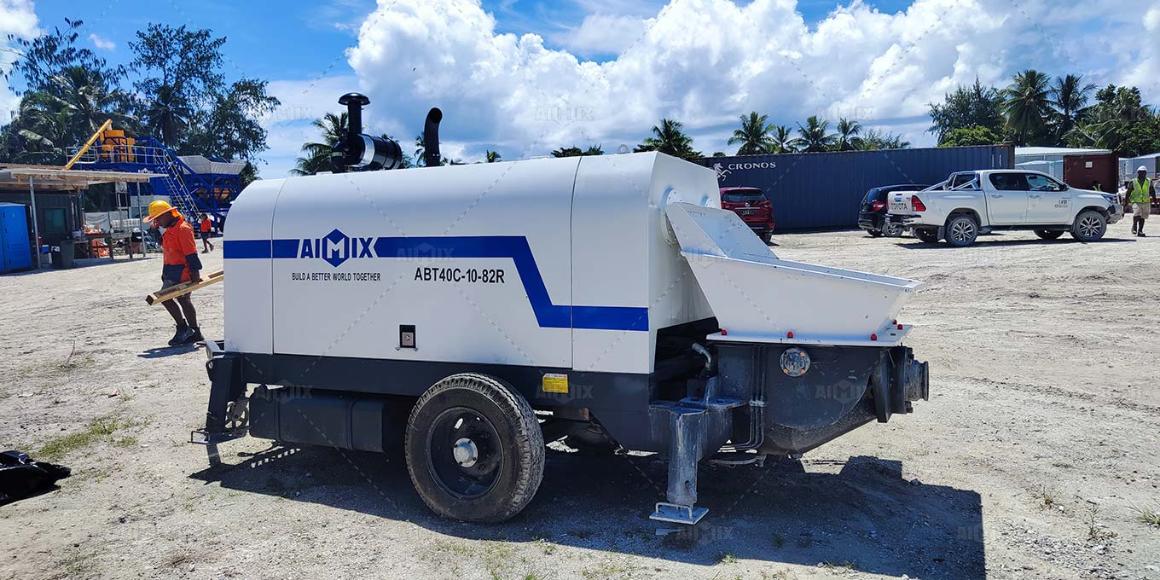
Smart Concrete Solutions: How Concrete Trailer Pumps Are Shaping UAE's Construction Future
The UAE's construction sector is a powerhouse of innovation, continually pushing boundaries with cutting-edge technologies. From towering skyscrapers to vast infrastructure projects, efficiency and precision are paramount. However, traditional concrete placement methods often lag behind the fast-paced demands of modern construction. Delays, material wastage, and logistical hurdles create inefficiencies that hinder progress.
Concrete trailer pumps are transforming this landscape. These compact yet powerful machines deliver concrete with remarkable accuracy, eliminating many of the inefficiencies of conventional techniques. Whether deployed on high-rise developments or complex infrastructure projects, concrete trailer pumps for sale ensure seamless operations, reducing costs and boosting productivity. The future of UAE construction is undeniably intertwined with these advanced pumping solutions.
The Advantages of Concrete Trailer Pumps
Enhanced Precision and Reduced Material Waste
Traditional concrete pouring methods often result in significant material waste due to inaccurate placement and excessive spillage. Concrete trailer pumps mitigate this issue by providing direct, controlled placement at the exact point of application. With high-pressure pumping capabilities, these machines ensure that every drop of concrete is efficiently utilized, reducing unnecessary expenditures on materials.
Versatility Across Different Project Types
From towering commercial structures to intricate residential developments, trailer pumps offer unmatched adaptability. Their ability to pump concrete across long distances and difficult terrains makes them indispensable for projects in densely populated urban areas and remote construction sites alike. Contractors benefit from a streamlined workflow, allowing them to complete projects with minimal disruptions.
Why UAE Contractors Are Choosing Trailer Pumps
Addressing Urban Construction Challenges
The UAE's urban landscape is characterized by rapid expansion and high-density development. This environment presents logistical challenges, particularly in transporting and placing concrete within constrained job sites. Boom concrete pumps in UAE provide a solution by minimizing the need for excessive manpower and ensuring rapid delivery, even in confined spaces.
Cost-Effective and Efficient Operations
Cost efficiency is a key driver in the adoption of trailer pumps. Compared to traditional concrete placement methods, these machines reduce labor costs and speed up project timelines. Their ability to pump concrete directly to upper floors or distant sections eliminates the need for excessive equipment and manual handling, resulting in significant financial savings.
The Future of Concrete Pumping in UAE
Integration with Smart Construction Technologies
The future of UAE’s construction industry is closely linked to automation and digitalization. Concrete trailer pumps are evolving to integrate with smart construction management systems, allowing for real-time monitoring and efficiency tracking. This data-driven approach ensures that construction projects are executed with unparalleled precision.
Sustainability and Environmental Considerations
With the UAE prioritizing sustainable development, the efficiency of concrete pumps for sale aligns with environmental goals. By reducing material waste and optimizing energy consumption, these machines contribute to eco-friendly construction practices. As regulatory frameworks tighten, adopting such technologies will become a necessity rather than an option.
Conclusion
Concrete trailer pumps are no longer a luxury but a necessity in the UAE’s fast-paced construction environment. Their precision, cost-effectiveness, and adaptability make them a cornerstone of modern building strategies. As the industry continues to innovate, these pumps will remain at the forefront, ensuring that the UAE’s ambitious construction projects meet the highest standards of efficiency and sustainability.
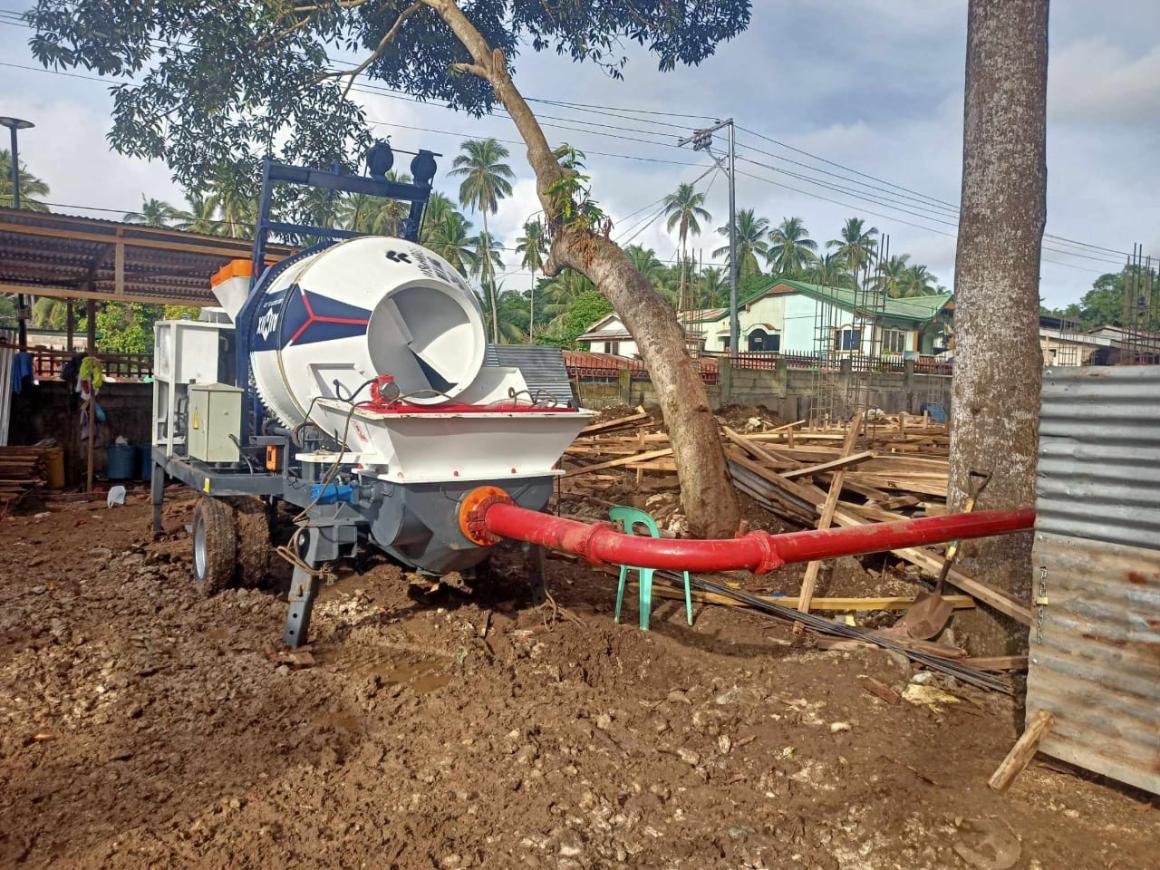
How Owning a Cement Mixer Pump for Sale Pays for Itself in 3 Projects
Investing in a cement mixer pump is more than just acquiring another piece of machinery; it is a strategic move that transforms the economics of small and mid-scale construction. Many contractors hesitate when faced with the initial cost, yet few realize how quickly this machine can offset its own price. Instead of outsourcing concrete mixing and pumping or relying on labor-intensive manual methods, an owned cement mixer pump streamlines operations, reduces material waste, and enhances overall project speed. The impact is immediate—efficiency surges, costs decrease, and timelines shrink.
For contractors handling multiple projects in quick succession, the financial benefits compound. Within just three well-planned projects, the machine effectively pays for itself, eliminating recurring rental fees and increasing profit margins. From residential foundations to commercial developments, the ability to mix and pump concrete on demand gives unparalleled control over scheduling and material quality. When efficiency meets autonomy, profitability follows.
The First Project: Slashing Labor and Rental Costs
The first noticeable impact of owning a cement mixer pump is the reduction of labor dependency and equipment rental fees. Contractors often allocate significant budgets to renting mixing and pumping equipment, which accumulates over multiple projects. With an in-house mixer pump, these recurring expenses vanish.
Minimizing Workforce Requirements
Manual concrete mixing and transportation require multiple laborers working in unison. By integrating a cement mixer pump, a contractor can accomplish the same output with a significantly smaller crew. This not only cuts down direct labor costs but also reduces the risks associated with workforce shortages and scheduling conflicts.
Eliminating Rental Dependence
Rental costs for concrete mixers and pumps vary depending on location and demand, often becoming a financial burden over time. By the end of a single medium-sized project, rental fees can reach thousands of dollars—funds that could have been reinvested into business growth. Owning a cement mixer pump ensures that every subsequent project is completed without unnecessary equipment lease expenses.
The Second Project: Speeding Up Construction Timelines
Time efficiency in construction translates directly into cost savings and client satisfaction. The ability to mix and pump concrete on-site eliminates the logistical bottlenecks associated with third-party suppliers, allowing projects to proceed smoothly and without unexpected interruptions.
Seamless Concrete Flow
Traditional concrete pouring methods often require extensive coordination with batching plants, leading to delays due to transportation constraints or supplier schedules. A self-owned concrete pump with mixer for sale ensures a continuous, controlled flow of fresh concrete, reducing waiting times and preventing material drying issues.
Increased Daily Output
By removing the dependency on external suppliers and rental constraints, contractors can increase their daily concrete output. A cement mixer pump allows for flexible work hours, ensuring that projects are completed faster. This speed advantage means that within two projects, the equipment has already accelerated return on investment through shorter completion times and higher turnover rates.
The Third Project: Enhancing Profit Margins Through Material Efficiency
Beyond labor and rental cost reductions, owning a cement mixer pump optimizes material usage, significantly decreasing wastage. Over-ordering or last-minute material shortages become rare, as contractors maintain direct control over the mixing process.
Precise Mix Ratios
One of the most overlooked financial drains in construction is incorrect mix ratios, which can lead to poor structural integrity or excessive waste. A cement mixer pump ensures precision in every batch, reducing material loss and enhancing concrete quality.
Reduction in Transportation Costs
With ready-mix deliveries, contractors often pay not just for the material but also for transportation and delivery waiting charges. Owning a small concrete mixer pump eliminates these costs, allowing for cost-effective, on-demand concrete production directly at the job site.
The Investment That Pays for Itself
By the time the third project is completed, the financial advantages of owning a cement mixer pump become undeniable. What once seemed like a large upfront expense transforms into a cost-saving asset that maximizes profit potential. With reduced labor, eliminated rental fees, accelerated timelines, and improved material efficiency, this investment doesn’t just pay for itself—it paves the way for greater business scalability and long-term financial stability.
Concrete Pump Types and Their Prices: Which One Fits Your Project
Concrete pumps are indispensable in modern construction, streamlining concrete placement with efficiency and precision. However, choosing the right pump for a project is not just about performance—it is also a financial decision. The concrete pump price varies significantly depending on its type, capacity, and operational features. Contractors and developers must balance cost against project needs, ensuring that the chosen pump enhances productivity without unnecessary expenses.
From small-scale residential works to large infrastructure projects, different types of concrete pumps cater to varying demands. Some are ideal for short-range, low-volume applications, while others handle high-rise structures and large-scale pours. Understanding these variations helps in making an informed investment that aligns with both technical requirements and budget constraints.
Understanding the Different Types of Concrete Pumps
Concrete pumps come in multiple configurations, each designed for specific project scales and site conditions. The primary types include boom pumps, trailer-mounted pumps, and line pumps. Each has unique advantages, influencing price points and operational suitability.
Boom Pumps: High-Capacity, High-Cost Solutions
Boom pumps are the preferred choice for large-scale construction projects requiring extensive reach. Equipped with a hydraulic arm, they can place concrete at significant heights and distances, making them essential for high-rise buildings and complex infrastructure. Their prices range from $100,000 to $500,000, depending on reach capacity, output rate, and brand. While costly, their efficiency in large-scale pours often justifies the investment.
Trailer-Mounted Pumps: Cost-Effective and Versatile
Trailer-mounted concrete pumps are compact, portable, and suitable for medium-scale projects. They require a separate vehicle for transportation but offer considerable flexibility in placement. These pumps cost between $30,000 and $100,000, making them an economical option for contractors handling both residential and commercial projects. Their lower upfront cost makes them appealing, though additional transport expenses should be factored in.
Line Pumps: Budget-Friendly for Smaller Projects
Line pumps, also known as stationary pumps, are ideal for small to mid-sized projects requiring precise concrete placement. They use flexible hoses to transport concrete over distances, making them perfect for residential constructions and decorative applications. Prices for concrete trailer pump typically fall within the $15,000 to $60,000 range. Their affordability and ease of use make them popular among independent contractors and small-scale builders.
Price Factors and How They Affect Your Budget
Beyond pump type, several factors influence the final price of a concrete pump. These include capacity, brand reputation, additional features, and operational costs. Analyzing these elements ensures that contractors make cost-effective decisions.
Pumping Capacity and Output Rate
Higher output rates generally translate to higher prices. Pumps capable of delivering over 100 cubic meters per hour command premium prices due to their ability to handle large-scale operations efficiently. However, for projects with moderate concrete requirements, lower-capacity models can provide significant savings without compromising performance.
Brand and Build Quality
Renowned manufacturers often offer better reliability and longevity, but at a higher price point. Brands like Schwing, Putzmeister, and AIMIX are known for durable and high-performance concrete pumps, though they come with a premium cost. Opting for lesser-known brands can reduce expenses but may increase maintenance and repair costs over time.
Operational and Maintenance Costs
Beyond initial purchase costs, fuel consumption, spare parts availability, and servicing expenses contribute to the total cost of ownership. Boom pumps, for instance, require specialized maintenance due to their hydraulic systems, leading to higher long-term expenses. Evaluating these factors is crucial for making a financially sound investment.
Choosing the Right Concrete Pump for Your Project
To determine the best concrete pump for a project, contractors must assess several critical aspects, including project scale, site accessibility, and budget constraints. A well-matched pump enhances efficiency while preventing unnecessary expenditures.
Project Scale and Requirements
Large-scale commercial and infrastructure projects benefit most from boom pumps due to their extensive reach and high output. On the other hand, smaller residential and decorative projects are best suited for stationary concrete pump, which offer precision at a lower cost.
Site Conditions and Accessibility
Urban and confined sites may require compact and maneuverable pumps, such as trailer-mounted units. Meanwhile, expansive job sites with extensive horizontal and vertical requirements justify the investment in a boom pump.
Balancing Cost and Long-Term Value
While initial costs are important, long-term efficiency should also be considered. Investing in a durable, high-quality pump reduces maintenance costs and extends service life, providing better value over time. Renting a pump for short-term projects may also be a viable cost-saving alternative.
Concrete pumps are a fundamental part of modern construction, with their price determined by numerous variables. Whether selecting a high-capacity boom pump or an economical line pump, careful evaluation of project needs and financial constraints ensures an optimal investment.
Utilizing Concrete Batching Plants for Road and Bridge Construction
The construction of roads and bridges is an intricate and demanding process that requires careful planning, precise material management, and effective machinery. In this context, concrete batching plant for sale plays a crucial role in ensuring the **quality and consistency** of the concrete used for road and bridge construction. These plants allow for the efficient production of large quantities of concrete, which is vital for the **durability** and **structural integrity** of critical infrastructure. Whether it’s for a small local road or a massive highway interchange, the use of concrete batching plants provides both the **volume** and **precision** required for successful completion. This article delves into how concrete batching plants are utilized in road and bridge construction projects, emphasizing their importance in ensuring optimal **quality control** and **efficiency**.
Advantages of Concrete Batching Plants in Large-Scale Infrastructure Projects
Concrete batching plants are pivotal in large-scale construction projects, particularly in road and bridge development. These plants ensure the **consistent production** of concrete in large volumes, making them an essential component for high-demand projects. The primary advantage of using a concrete batching plant is its ability to produce **uniform concrete mixes**, which is vital for the **structural strength** and **longevity** of roads and bridges. Each batch is mixed to precise specifications, ensuring that the concrete meets both local regulations and project requirements.
Consistency and Quality Control
One of the most compelling reasons for utilizing concrete batching plants in infrastructure projects is their ability to maintain a **high degree of consistency**. Unlike manual mixing, where variations in material proportions or errors in timing can affect the quality, batching plants automate the process, delivering concrete that is **uniform in strength** and texture. This is particularly important in road and bridge construction, where fluctuations in concrete quality can lead to **structural weaknesses** or **failure** over time. By using advanced systems to control the ratio of ingredients and ensuring thorough mixing, batching plants help contractors achieve superior and consistent results.
Efficiency in Material Management
Concrete batching plants also streamline **material management**, an essential aspect of road and bridge construction. Large infrastructure projects often require the transport of vast amounts of raw materials, including aggregates, cement, water, and additives. With a batching plant, these materials are organized and delivered on-site precisely when needed, reducing both **material wastage** and the logistical challenges of coordinating deliveries. This helps maintain **tight project timelines** by ensuring that the concrete mix is ready at the right time, preventing delays caused by waiting for manual mixing or sourcing materials.
Enhancing the Sustainability of Road and Bridge Construction
In today’s construction industry, sustainability is a growing concern, particularly in road and bridge projects where large quantities of materials are used. Small concrete batching plants contribute significantly to the **sustainability** of these projects by ensuring **efficient use of resources** and minimizing waste. By optimizing the use of raw materials, batching plants not only reduce costs but also lessen the environmental impact of construction activities.
Resource Optimization
Concrete batching plants allow for the precise calculation of material requirements, reducing the risk of **over-ordering** or **under-ordering** materials. This results in fewer wasted resources, especially in projects requiring substantial volumes of concrete, like bridges and highways. Furthermore, modern batching plants incorporate systems that recycle unused concrete, **eliminating waste** and contributing to a more **eco-friendly** construction process. With a focus on **resource optimization**, batching plants help mitigate the environmental impact of large-scale construction projects, making them a crucial tool for sustainability in infrastructure development.
Reducing Carbon Footprint
Another significant advantage of using concrete batching plants is their contribution to reducing the **carbon footprint** of road and bridge construction. The ability to mix concrete on-site means fewer trips are needed for material transportation, reducing the amount of fuel consumed and the emissions produced. Furthermore, batching plants that use **energy-efficient technologies** and **eco-friendly practices** can further minimize environmental impact. By incorporating recycled aggregates, using **alternative cementitious materials**, and optimizing the energy consumption of their processes, batching plants help make road and bridge construction more sustainable in the long term.
The Role of Concrete Batching Plants in Ensuring Safety and Compliance
Safety and compliance with industry standards are paramount in the construction of roads and bridges. The quality of the concrete used in these projects directly influences their **safety** and **structural integrity**. Concrete batching plants play an essential role in ensuring that the concrete mixes meet or exceed required **standards** for strength and durability. By automating the batching process, these plants reduce human error and improve **quality assurance**. Moreover, their ability to handle large-scale production in a controlled environment ensures compliance with safety regulations, protecting both workers and the integrity of the final structure.
Automation and Error Reduction
In road and bridge construction, minimizing errors in concrete production is critical to ensuring the **safety** of the infrastructure. By automating the mixing process, mobile batching plant for sale significantly reduces the risk of human error in proportioning materials, timing, and consistency. This not only leads to a more **accurate mix** but also enhances **overall safety**, as the risk of **substandard concrete** being used is drastically diminished. Automated systems also allow for more precise tracking of each batch’s production, ensuring that all concrete used complies with the relevant safety and quality regulations.
Compliance with Industry Standards
Concrete batching plants are equipped to comply with stringent construction standards and regulations that govern road and bridge projects. These regulations often specify the **grade of concrete** required for various structural elements, as well as the environmental standards for materials used. With batching plants, contractors can ensure that the concrete produced meets these **exacting standards**, offering a reliable and consistent supply of concrete that adheres to **local construction codes**. This helps contractors avoid costly mistakes and delays caused by non-compliant materials.
In conclusion, concrete batching plants are an indispensable asset in the construction of roads and bridges. They provide **consistent concrete quality**, enhance **sustainability**, and ensure **safety and compliance**. As infrastructure projects continue to grow in scope and complexity, the utilization of batching plants will be increasingly critical to ensuring the successful and efficient delivery of high-quality concrete for road and bridge construction.
In the fast-paced world of residential construction, selecting the right equipment is crucial for efficiency and cost-effectiveness. Among the most valuable tools in modern homebuilding is the small concrete pump, a compact yet powerful machine that enhances construction speed, precision, and flexibility. These pumps have become a preferred choice for builders aiming to optimize their workflow and improve project outcomes.
What Makes Small Concrete Pumps Essential?
Small concrete pumps, including both boom and line pumps, are designed to transport and place concrete with high accuracy. Unlike traditional methods, these small concrete pumps for sale eliminate the need for manual labor-intensive pouring, ensuring a seamless and efficient construction process.
- Compact and Maneuverable: Their small size allows them to navigate tight spaces and urban environments where larger equipment may struggle.
- Precision Placement: These pumps enable controlled concrete delivery, reducing waste and enhancing build quality.
- Easy Transport: Their lightweight design ensures they can be moved quickly between job sites.
Boosting Efficiency in Residential Construction
Time efficiency is a key factor in any construction project, and small concrete pumps help significantly reduce delays. They facilitate fast and direct concrete placement, cutting down waiting times and minimizing disruptions on site. This streamlined approach leads to:
- Faster Project Completion: Continuous concrete flow speeds up the building process.
- Lower Operating Costs: Smaller pumps consume less fuel and require minimal maintenance.
- Reduced Material Waste: Precise pouring ensures every batch is utilized efficiently.
Versatility for Different Project Needs
One of the biggest advantages of small concrete pumps is their adaptability. Whether it’s a minor renovation or a large-scale residential build, these concrete pumps for sale cater to different project requirements without compromising performance. Their benefits include:
- Flexibility Across Job Sizes: Suitable for various residential construction tasks, from small foundations to complete home builds.
- Ideal for Urban Construction: Their ability to work in confined spaces makes them perfect for city projects.
- Consistent Workflow: Builders can maintain steady progress without interruptions.
Conclusion
The rising popularity of small concrete pumps in residential construction is driven by their efficiency, cost-effectiveness, and versatility. These machines are transforming the way homes are built, offering practical solutions for modern construction challenges. By integrating small concrete pumps into their operations, builders can achieve higher productivity, reduce costs, and enhance overall project quality.
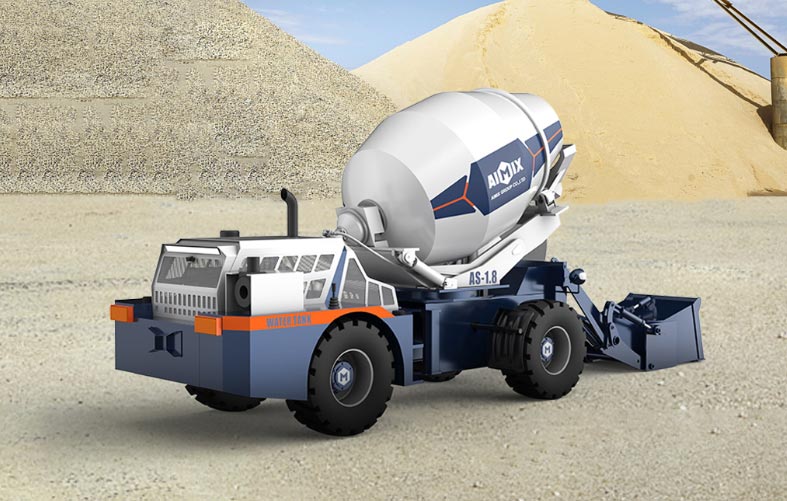
What Should You Pay Attention to When the Tires of Self-Loading Mixer Bulge and Crack?
The tires of a self-loading mixer play a pivotal role in ensuring its operational safety and performance. Given the demanding conditions these machines endure, their tires are subjected to constant stress. Bulges and cracks on the tires are warning signs that require immediate attention. Ignoring these can lead to severe consequences, including accidents, increased repair costs, and project delays. Understanding the causes and solutions for tire damage is critical for maintaining the efficiency and safety of your self loading mixer.
Understanding the Causes of Tire Bulges and Cracks
Tire bulges and cracks on a self-loading mixer often stem from a combination of factors. These can include operational conditions, tire quality, and maintenance practices. Recognizing these causes is the first step toward preventing damage.
Impact of Overloading and Uneven Weight Distribution
Overloading is a primary cause of tire bulges. When a self-loading mixer carries loads exceeding its tire capacity, the excessive weight exerts undue pressure on the tire walls. This results in structural damage, leading to the formation of bulges. Similarly, uneven weight distribution across the tires accelerates wear and tear, compromising the tire's integrity.
Poor Maintenance Practices
Neglected maintenance is another contributing factor. Under-inflated or over-inflated tires lack the resilience needed to withstand operational stress. Improper tire pressure causes uneven wear and increases the risk of cracks developing along the surface. Additionally, failing to regularly inspect the tires for embedded debris or wear patterns exacerbates the problem.
Steps to Address Tire Bulges and Cracks
Once bulges and cracks appear on the tires of a self-loading mixer, taking immediate action is crucial. Proper handling of such issues minimizes risks and ensures operational continuity.
Conducting a Thorough Inspection
Start by conducting a meticulous inspection of all tires. Identify the size, location, and severity of the bulges or cracks. This evaluation helps determine whether the tire can be repaired or needs to be replaced entirely. Be sure to check the inner sidewalls and tread area, as damage in these zones can be less noticeable but equally dangerous.
Maintaining Optimal Tire Pressure
Ensuring proper tire inflation is critical. Refer to the manufacturer's guidelines to maintain the recommended tire pressure. Under-inflation leads to excessive flexing of the sidewalls, while over-inflation reduces the tire's ability to absorb shocks, both of which can worsen existing damage. Use a reliable pressure gauge to check the pressure regularly.
Timely Replacement of Damaged Tires
When tire damage is beyond repair, timely replacement is essential. Continuing to operate the mixer with compromised tires not only risks safety but can also lead to collateral damage to the vehicle. Invest in high-quality tires designed specifically for self-loading mixers to enhance durability and performance.
Preventing Future Tire Damage
Prevention is always better than cure. Implementing proactive measures can significantly reduce the likelihood of tire bulges and cracks, ensuring the longevity and safety of your self-loading mixer.
Regular Maintenance Schedules
Establish a consistent maintenance schedule that includes tire inspections, pressure checks, and rotation. Regularly cleaning the tires to remove embedded debris can also prevent small issues from escalating. Proper alignment of the wheels ensures even weight distribution, reducing unnecessary stress on the tires.
Adopting Safe Operating Practices
Train operators on the importance of adhering to load limits and avoiding rough terrain whenever possible. Safe driving practices, such as avoiding sharp turns and sudden braking, can also reduce the strain on tires, preventing premature wear and damage.
Investing in High-Quality Tires
Choosing durable, high-performance tires designed for self-loading mixers is a long-term investment. These tires are engineered to withstand heavy loads and harsh conditions, minimizing the risk of bulges and cracks. Opt for reputable brands that meet industry standards for safety and reliability.
By understanding the causes, addressing existing issues promptly, and taking preventive measures, operators can ensure the smooth and safe operation of the self loading concrete mixer. The integrity of the tires is not just about mobility—it is a cornerstone of operational efficiency and workplace safety.
Which Projects Are Best Suited for Mini Concrete Pumps? A Quick Guide
Mini concrete pumps have emerged as indispensable assets in the construction sector. Their compact size, cost-efficiency, and ease of operation make them a preferred choice for a diverse array of projects. While they are smaller in scale compared to traditional concrete pumps, their utility in delivering precise and consistent concrete output is unmatched. The versatility of these pumps ensures that they are suitable for various applications, from residential construction to specialized industrial tasks. This guide highlights the types of projects where mini concrete pumps truly shine.
Residential Construction Projects
Residential projects demand efficient yet compact machinery to navigate confined spaces and ensure timely execution. Mini concrete pumps for sale excel in this domain by offering unparalleled maneuverability and operational efficiency.
Home Renovations and Extensions
Renovations and home extensions often require concrete placement in restricted areas. Mini concrete pumps are adept at delivering concrete to precise locations, eliminating the need for manual labor or wheelbarrows. Whether it’s laying a new patio foundation or adding an additional room, these pumps ensure uniform and high-quality concrete placement.
Foundation and Driveway Installations
Building a robust foundation or driveway requires accuracy in concrete pouring. Mini concrete pumps, with their steady flow and control, enable contractors to achieve seamless finishes. Their compact size allows access to narrow driveways and hard-to-reach foundation sites.
Commercial Applications
Commercial projects often balance tight budgets with high expectations for quality and efficiency. Mini concrete pumps offer a reliable solution for small to medium-sized commercial tasks, providing versatility and precision.
Small Retail Developments
For projects like small retail spaces or compact office structures, mini concrete pumps for sale facilitate quick and precise concrete placement. Their ability to navigate urban environments and deliver consistent output makes them ideal for such tasks.
Parking Lot Repairs
Repairing parking lots involves addressing damaged areas while minimizing disruptions. Mini concrete pumps allow contractors to focus on specific zones, delivering concrete with precision while ensuring the surrounding areas remain unaffected.
Specialized Construction Projects
Beyond residential and commercial applications, mini concrete pumps are invaluable in specialized projects where precision and accessibility are paramount. These projects often require equipment that combines efficiency with adaptability.
Swimming Pool Construction
Swimming pool construction involves intricate designs and precise concrete placement. Mini concrete pumps are adept at delivering concrete into the curved and confined spaces typical of pool structures, ensuring uniformity and durability.
Landscaping and Hardscaping
Landscaping projects, including garden pathways, retaining walls, and decorative concrete elements, benefit significantly from the compact size and precision of mini concrete pumps. Their ability to handle smaller volumes of concrete without wastage is an added advantage for these intricate tasks.
Mini concrete pumps have redefined efficiency in the construction industry. Their versatility and adaptability make them indispensable for a variety of projects, from residential renovations to specialized landscaping tasks. By choosing the right pump for the job, contractors can ensure superior results and streamlined operations.
How To Adjust The Pressure Of The Trailer Concrete Pump Hydraulic System?
Understanding the intricacies of a trailer concrete pump's hydraulic system is crucial for ensuring optimal performance and longevity. The hydraulic system plays a pivotal role in controlling the pressure, which directly affects the efficiency of concrete pumping. Adjusting the pressure not only enhances operational safety but also minimizes wear on components, reducing maintenance costs. In this article, we will explore the fundamental aspects of adjusting trailer concrete pump hydraulic pressure, the potential ramifications of improper settings, and best practices to achieve a fine-tuned hydraulic system.
The Importance of Hydraulic Pressure in Concrete Pumps
Hydraulic pressure governs the entire operation of a concrete pump, influencing everything from the speed of concrete delivery to the pump's overall efficiency. An optimal pressure setting ensures a consistent flow of concrete, preventing blockages and ensuring the material reaches its destination without undue delay. Conversely, incorrect pressure settings can lead to catastrophic failures, such as ruptured hoses or damaged internal components, which can halt operations and incur significant repair costs.
Understanding Pressure Settings
Before embarking on any adjustments, it is essential to comprehend the pressure specifications set forth by the concrete pump supplier. These specifications are typically outlined in the operator’s manual and are tailored to the pump's design and intended applications. General pressure ranges can vary widely, but a common threshold is between 2000 to 3000 psi for many trailer concrete pumps. Familiarity with these parameters provides a foundation for safe and effective adjustments.
Identifying the Pressure Adjustment Mechanism
Most trailer concrete pumps come equipped with a pressure relief valve and a pressure gauge, both vital in regulating hydraulic pressure. The relief valve releases excess pressure, ensuring the system does not exceed its safe operating limits. Adjusting this valve is typically done by turning a screw or knob, but the precise method can vary by model. Always refer to the manufacturer's guidelines for specific instructions.
Steps to Adjust Hydraulic Pressure
Adjusting the hydraulic pressure requires a systematic approach. First, ensure the pump is on a stable surface and that all safety measures are in place. Begin by starting the pump and allowing it to reach its operating temperature. This step is crucial, as hydraulic fluid expands when heated, affecting pressure readings.
Calibrating the Pressure Gauge
Once the pump is warm, observe the pressure gauge. If the pressure is outside the desired range, use the adjustment mechanism to increase or decrease the pressure accordingly. It is advisable to make small adjustments, allowing the system to stabilize between changes. Continuously monitor the gauge to ensure that it reflects the intended pressure accurately. If you need any help, please contact AIMIX engineers for help.
Testing the System
After adjustments are made, conduct a test run. This entails running the pump in a controlled environment to observe its performance under the new pressure settings. Look for signs of irregular operation, such as unusual noises or fluctuating pressure readings. If the system operates smoothly, the adjustments can be deemed successful. If issues arise, further adjustments may be necessary.
Conclusion
Adjusting the pressure of a trailer concrete pump's hydraulic system is not merely a technical task; it is a critical component of effective pump operation. By understanding the importance of hydraulic pressure, familiarizing oneself with the adjustment mechanisms, and following a methodical approach to calibration, operators can significantly enhance both performance and safety. Ultimately, a well-maintained hydraulic system not only optimizes workflow but also extends the lifespan of the equipment, yielding long-term benefits for any concrete pumping operation.
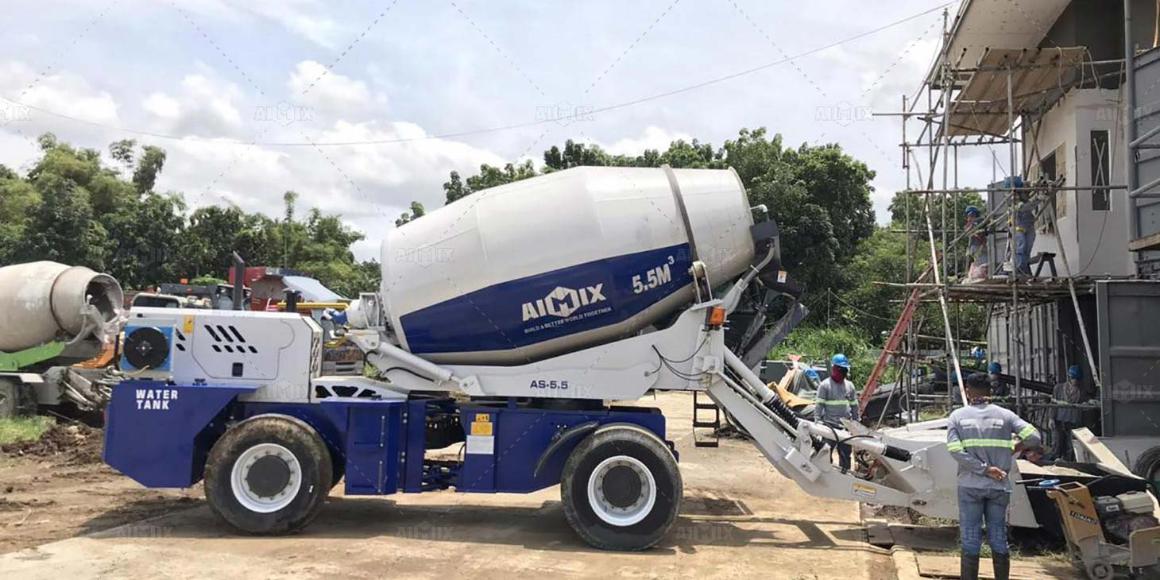
How To Solve The Rust Problem Of The Steel Water Tank Of The Automatic Self Loading Mixer?
Rust is a pervasive nuisance in the realm of steel water tanks, particularly those utilized in automatic self-loading mixers. The corrosive nature of rust not only compromises the structural integrity of the tank but also affects the quality of water stored within. Consequently, addressing this issue is paramount for ensuring longevity and optimal performance of the self loading concrete mixer with pump. This article delves into effective strategies for mitigating rust formation and enhancing the durability of steel water tanks.
Understanding the Causes of Rust Formation
The Role of Moisture and Oxygen
Rust, scientifically known as iron oxide, forms when iron or its alloys come into contact with moisture and oxygen. In the context of steel water tanks, the constant presence of water creates an environment ripe for oxidation. Even minimal exposure to moisture can initiate the rusting process, especially in the absence of protective coatings.
Environmental Factors
Environmental conditions significantly influence the rate of rust development. High humidity levels, acidic water, and saline environments accelerate corrosion. Additionally, temperature fluctuations can exacerbate the situation by causing condensation on tank surfaces. A comprehensive understanding of these factors is essential to devise effective preventive measures.
Preventive Measures to Combat Rust
Protective Coatings
One of the most effective ways to stave off rust is through the application of protective coatings. Epoxy paints and polyurethane coatings provide an impermeable barrier that minimizes direct contact between the steel and corrosive elements. Regular inspection and maintenance of these coatings are vital to ensure their effectiveness over time.
Regular Maintenance Practices
Implementing rigorous maintenance practices can significantly reduce the likelihood of rust formation. Routine cleaning of the tank, coupled with periodic inspections for wear and damage, allows for early detection of potential issues. Moreover, ensuring that the tank is kept dry and free from stagnant water can thwart rust development.
Repairing Rust Damage
Identifying and Assessing Damage
Should rust damage occur, prompt identification and assessment are crucial. Small rust spots can often be treated with wire brushing and rust-inhibiting primers. However, extensive corrosion may necessitate more drastic measures, such as sections of the steel being replaced. Evaluating the severity of the rust damage will guide the appropriate repair approach.
Replacement and Upgrades
In cases where rust has severely compromised the tank's integrity, replacement of the tank may be the most prudent choice. Upgrading to stainless steel or incorporating corrosion-resistant alloys can provide a long-term solution. These materials inherently resist rust, significantly enhancing the lifespan of the water tank in automatic concrete mixer in Kenya.
By understanding the causes of rust, implementing preventive measures, and addressing any damage promptly, the longevity and efficiency of steel water tanks can be significantly improved. These strategies not only protect the investment in equipment but also ensure that the quality of water remains uncompromised, paving the way for more durable and reliable operations.
From Mixing to Pouring: The All-in-One Solution of Self-Loading Concrete Mixers
Self-loading concrete mixers represent a paradigm shift in the construction industry. These versatile machines not only streamline the process of concrete mixing but also facilitate an efficient pouring mechanism, reducing labor costs and enhancing productivity. As projects become increasingly complex, the demand for all-in-one solutions continues to escalate. This article delves into the multifaceted capabilities of self loading concrete mixers, exploring their operational mechanics, advantages, and the future of concrete mixing technology.
Understanding the Mechanics of Self-Loading Concrete Mixers
Design and Functionality
At the heart of a self-loading concrete mixer is a sophisticated amalgamation of engineering and technology. These machines are equipped with a rotating drum that simultaneously mixes and transports concrete. The integral design includes a built-in bucket that autonomously loads materials, such as sand, gravel, and cement, directly into the mixer. This eliminates the need for separate loading equipment, thereby optimizing the workflow. Moreover, the hydraulic systems in these mixers ensure that the materials are mixed uniformly, resulting in a consistent concrete composition.
Operational Efficiency
One of the paramount benefits of self-loading concrete mixers is their operational efficiency. The ability to load, mix, and pour concrete within a single machine significantly reduces the time and labor involved in traditional methods. Operators can maneuver these mixers into tight spaces, making them ideal for urban construction sites or projects with spatial constraints. The intuitive controls allow for easy operation, enabling even less experienced personnel to effectively manage the mixing and pouring processes. This not only expedites project timelines but also enhances safety on-site by minimizing the need for multiple pieces of equipment.
Advantages of Self-Loading Concrete Mixers
Cost-Effectiveness
Investing in a self-loading concrete mixer can yield substantial cost savings over time. By consolidating equipment needs, construction firms can reduce the expenses associated with renting or purchasing multiple machines. Furthermore, the reduction in labor costs—thanks to the automation of loading and mixing—allows for reallocation of resources to other critical areas of the project. The durability and low maintenance requirements of the self loading concrete mixer for sale in Nigeria also contribute to long-term financial benefits, ensuring that they remain a viable investment for years to come.
Environmental Considerations
In an era where sustainability is paramount, self-loading concrete mixers offer a more environmentally friendly approach to concrete construction. These machines are designed to minimize waste by precisely measuring and mixing the required amounts of materials. This not only reduces excess concrete but also lowers the carbon footprint associated with transportation since the need for additional trucks is eliminated. Additionally, many modern mixers are equipped with features that promote fuel efficiency, further enhancing their eco-friendly profile.
The Future of Concrete Mixing Technology
Innovations on the Horizon
The field of concrete mixing technology is ripe for innovation, and self-loading concrete mixers are at the forefront of this evolution. Future developments may include enhanced automation, such as integration with smart technologies and IoT capabilities. This could allow for real-time monitoring of concrete quality and consistency, as well as predictive maintenance that minimizes downtime. As the industry continues to embrace digital transformation, the potential for self-loading mixers to adapt and improve will likely lead to even greater efficiencies.
Conclusion
In conclusion, self-loading concrete mixers epitomize the fusion of technology and practicality in the construction sector. Their ability to seamlessly transition from mixing to pouring not only enhances operational efficiency but also provides significant cost savings and environmental benefits. As the demand for innovative construction solutions grows, self-loading concrete mixers will undoubtedly play a pivotal role in shaping the future of concrete mixing technology.